
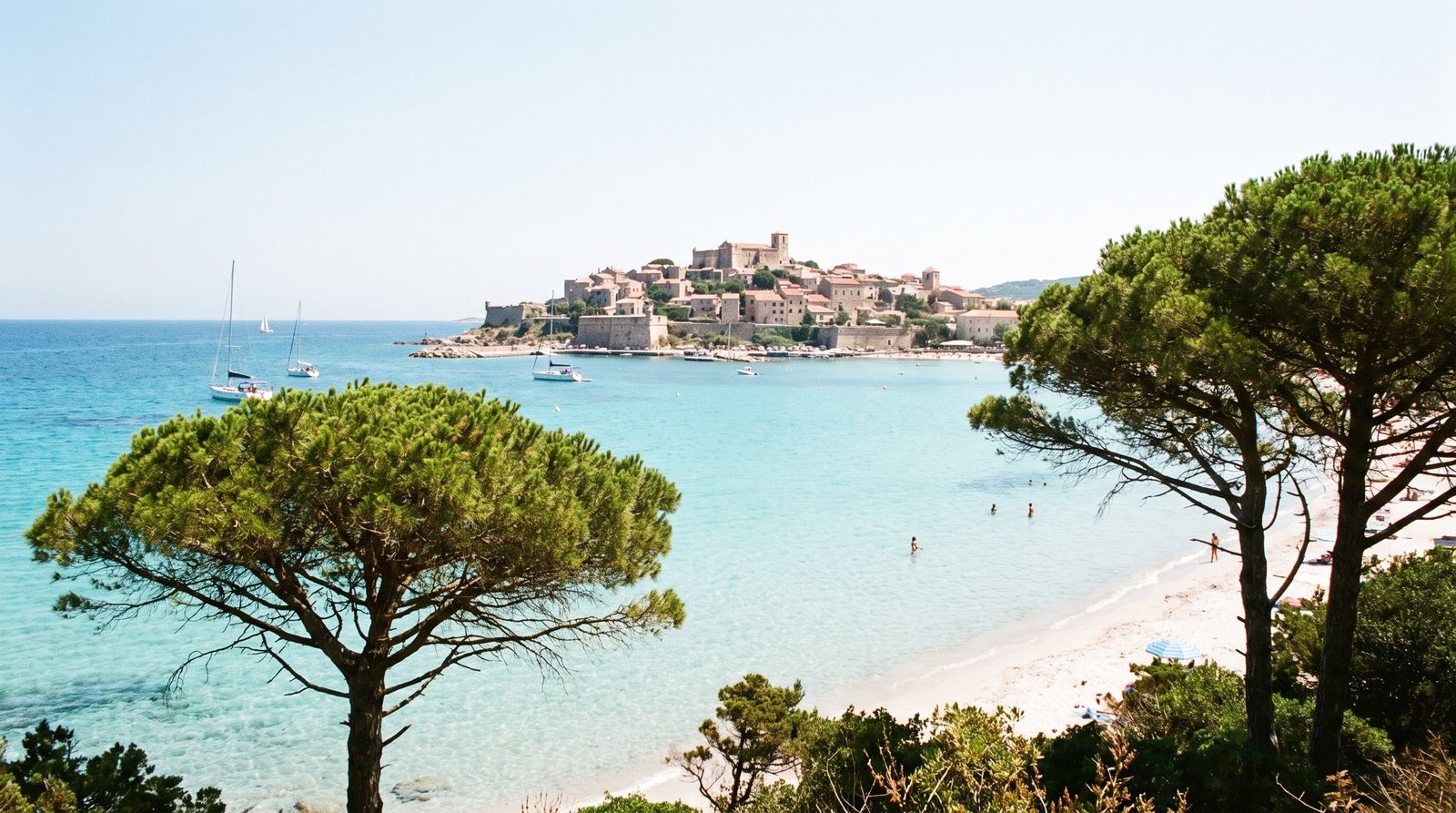
- Porto-Vecchio is a fortified port town in the far south of Corsica, with a Genoese citadel above a marina and some of the island’s most famous beaches, Palombaggia and Santa Giulia, a short drive away.
- The nearest airport is Figari, which the tourist office places about 25 km from town, and ferries sail to Porto-Vecchio from Marseille, Nice and Toulon.
- Give it three to five days: one for the old town, two or three for the beaches, one for the Ospedale forest and a day trip to Bonifacio. A car makes everything easier.
Porto-Vecchio, Corsica, is the classic base for a beach holiday in the south of the island. The old town sits on a rocky promontory overlooking its gulf, the marina below is full of yachts in summer, and within a short drive you will find the white sand and turquoise water that fill so many Corsican postcards. But the area is more varied than its beaches: behind the coast rise the forests and granite peaks of the Ospedale, and Bonifacio is close enough for a day trip. This guide covers what to see in the old town, the best beaches nearby, day trips, how to get there by ferry or plane and how to get around. Facts come from the Porto-Vecchio tourist office and the official websites of the island’s tourism agency and ferry operators.
Porto-Vecchio at a glance
The town is known in Corsican as Portivechju, and the Porto-Vecchio tourist office calls it the “Salt City” because of the salt marshes that once made its fortune, alongside a cork industry whose old factories still stand near the marina. Its Genoese citadel and narrow streets form the historic centre, while the beaches and the mountain village of L’Ospedale lie within the same commune.
| What | Details |
|---|---|
| Location | South east coast of Corsica, in the Corse-du-Sud department |
| Nearest airport | Figari, about 25 km from town according to the tourist office |
| Ferry links | Sailings from Marseille, Nice and Toulon (check each operator’s timetable) |
| Famous beaches | Palombaggia, Santa Giulia and others along the coast to the north and south |
| Inland | L’Ospedale village and forest, waterfalls and signposted walks |
| Car needed? | Not for the old town, but yes for the beaches and day trips |
Things to do in Porto-Vecchio old town
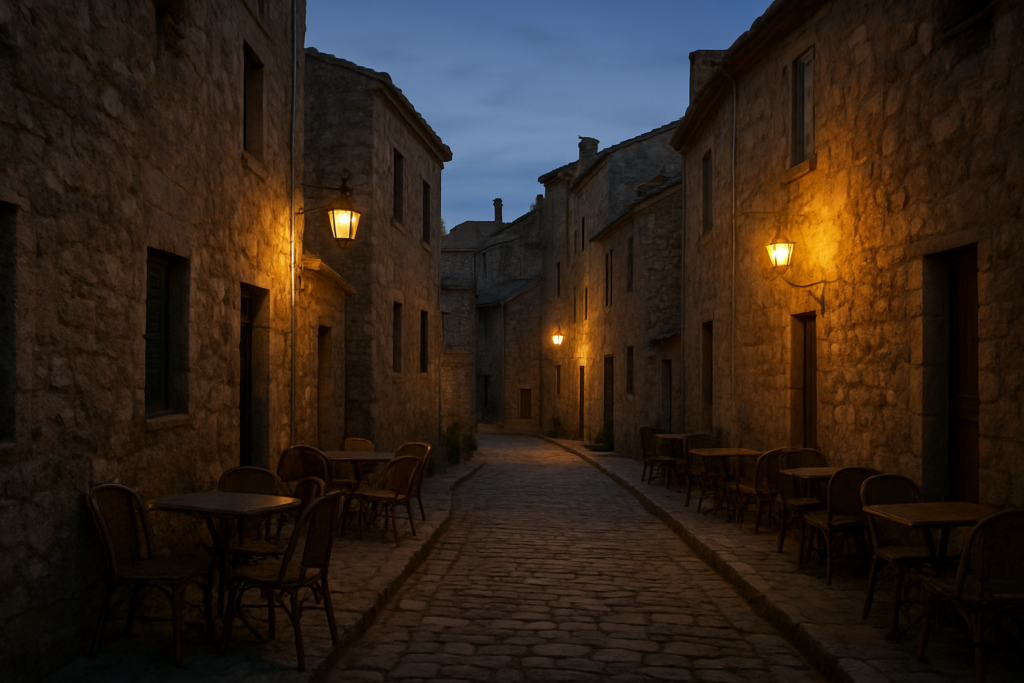
Walk the Genoese citadel
The upper town is the heart of Porto-Vecchio. Its walls, gates and lanes date from the Genoese period, which the tourist office says left “a strong imprint” after five centuries of presence. Climb to the terrace of the Bastion de France for views across the gulf; the bastion also hosts a permanent exhibition on the town’s natural and cultural heritage. In the evening the main square, Place de la République, and the surrounding lanes fill with diners.
The marina and the salt marshes
Below the citadel, the old port and the marina are pleasant for an evening stroll. Look out for the remains of the town’s industrial past, including the former cork factories and the old salt marshes. The tourist office also notes that the railway line from Bastia once reached the quay, a reminder of how busy the port used to be.
Guided tours and games for children
The tourist office runs guided tours of the citadel and offers a self-guided visit with its À Spassu app, plus treasure hunts that are a good way to keep children interested in the historic centre.
The best beaches near Porto-Vecchio
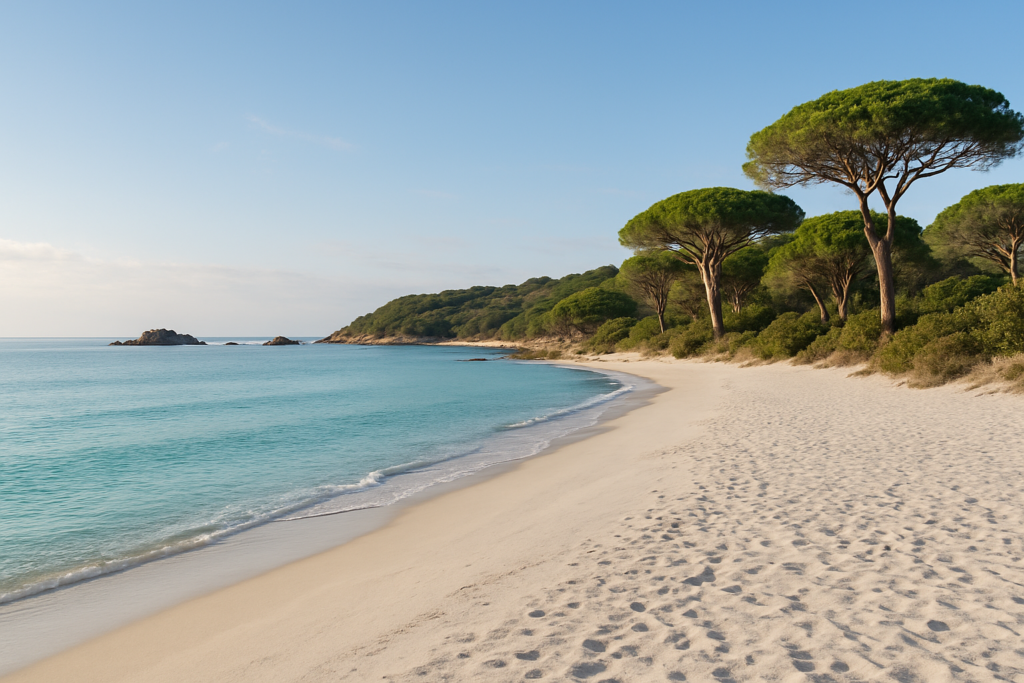
The coastline around Porto-Vecchio is famous for its pale sand and clear, shallow water. Many of these beaches are protected natural sites: the tourist office explains that they are looked after by the Bouches de Bonifacio Nature Reserve and the Conservatoire du Littoral, and that the umbrella pines and junipers behind Palombaggia help fix the dunes.
- Palombaggia: the best known, a long sweep of fine sand lined with pines, facing the Cerbicale Islands, which are a refuge for seabirds.
- Santa Giulia: a sheltered, lagoon-like bay with shallow water, popular with families and for water sports. Behind it lies a pond classified as a natural area of ecological interest.
- The beaches to the north: heading up the coast you will find quieter bays and coves, good if you want to escape the busiest spots in August.
- Towards Bonifacio: the coast road south leads to further celebrated bays on the way to Bonifacio.
For a full island-wide list, see our guide to the best beaches in Corsica, linked at the end of this article. If you want to wake up near the sand, our guide to luxury villas in Corsica covers the south east coast, where many of the island’s most sought-after rentals are found.
Day trips from Porto-Vecchio
L’Ospedale forest and waterfall
Just inland, the granite village of L’Ospedale sits at 948 metres, according to the tourist office, and opens the road to the Alta Rocca. Behind it, a forest of laricio pines and beech trees surrounds a reservoir and a network of signposted paths, including the walk to the Piscia di Ghjaddu waterfall and the trail to the Punta di a Vacca Morta, the highest point of the commune at 1,314 metres. The forest is protected and managed with the Corsica Regional Nature Park, so stay on the paths and do not disturb the wildlife.
Prehistoric sites
The plains around the town hold two Bronze Age sites, Ceccia and Tappa, which the tourist office describes as Torrean “casteddi”. They make a short, interesting stop on the way to the hills.
Bonifacio
The cliff-top town of Bonifacio, at the southern tip of the island, is the most popular day trip from Porto-Vecchio, with its citadel, boat trips along the cliffs and ferries to Sardinia. Our Bonifacio guide, linked below, covers it in detail.
Boat trips
Several local operators run boat excursions from Porto-Vecchio along the coast in season. Itineraries and departure times vary, so book with an operator listed by the tourist office and check the weather forecast before you go.
When to visit Porto-Vecchio
The best time to visit depends on what you want from your stay. July and August bring the warmest sea, the longest days and the liveliest evenings in the citadel, but also the biggest crowds, the highest accommodation prices and busy beach car parks. June and September are the sweet spot for many British visitors: the sea is usually warm enough for swimming, the beaches are calmer and it is easier to find a table in the old town.
Spring and autumn suit walkers heading for the Ospedale forest, when the paths are cooler and the scrubland smells of myrtle and rosemary. In winter the town is quiet and many beach businesses close, although the tourist office lists events all year round, including a Christmas market and an ice rink in December. Whatever the season, check the forecast before a day on the water or in the hills, as conditions can change quickly.
Eating out in Porto-Vecchio
The old town and the marina have plenty of restaurants, from simple pizzerias to smarter tables. Look out for Corsican charcuterie, sheep and goat cheeses, chestnut flour specialities and local wines, and ask what the catch of the day is in the harbourside restaurants. In high season, booking a table for dinner in the citadel is a good idea.
How to get to Porto-Vecchio
By plane
Figari is the closest of Corsica’s four airports, listed on the official Visit Corsica flights page. From the airport you continue by road, and most visitors hire a car on arrival: our guide to car hire in Porto-Vecchio explains your options.
By ferry
Porto-Vecchio has its own commercial port, which avoids a long drive from Bastia or Ajaccio if you are bringing your car. Corsica Ferries lists crossings from Nice to Porto-Vecchio and from Toulon, and La Méridionale runs a Marseille to Porto-Vecchio route. Frequencies are lower than on the main Ajaccio and Bastia routes and vary with the season, so book early for summer.
Getting around and where to stay
The old town is compact and walkable, but the beaches, the Ospedale and Bonifacio are spread out, and public transport to the beaches is limited. For most visitors a car, or at least a scooter, is essential. Accommodation ranges from hotels in and around town to holiday rentals, campsites and villas near the beaches; staying near the coast saves time in summer, while staying in town gives you restaurants and evening life on foot.
Porto-Vecchio quiz
Pick an answer and the correction appears instantly.
1. What nickname does the tourist office give Porto-Vecchio?
Correct: its old salt marshes earned it the name Salt City.Not quite: it is known as the Salt City.
2. Which airport is closest to Porto-Vecchio?
Right: Figari is about 25 km away.No: Figari, about 25 km from town, is the closest.
3. What is the mountain village above Porto-Vecchio called?
Exactly: L’Ospedale sits at 948 metres.Not quite: it is L’Ospedale, at 948 metres.
4. Which beach is described as sheltered and lagoon-like?
Correct: Santa Giulia is a shallow, sheltered bay.No: that is Santa Giulia.
FAQ
Is Porto-Vecchio worth visiting?
Yes, especially for a beach holiday. It combines a lively historic town with some of Corsica’s most famous beaches and easy access to the mountains and Bonifacio.
What is the closest airport to Porto-Vecchio?
Figari airport, which the Porto-Vecchio tourist office places about 25 km from town.
Can you get a ferry to Porto-Vecchio?
Yes. Corsica Ferries sails from Nice and Toulon, and La Méridionale from Marseille. Check each operator’s timetable, as sailings vary by season.
Which is better, Bonifacio or Porto-Vecchio?
They suit different trips. Porto-Vecchio is the better base for beaches and has more accommodation; Bonifacio is more spectacular as a town. Many visitors stay in Porto-Vecchio and visit Bonifacio for the day.
Do you need a car in Porto-Vecchio?
Not in the old town, but a car is strongly recommended for reaching the beaches, the Ospedale forest and Bonifacio.
How many days do you need in Porto-Vecchio?
Three to five days is a good length to see the town, enjoy a few beaches and take a day trip inland or to Bonifacio.