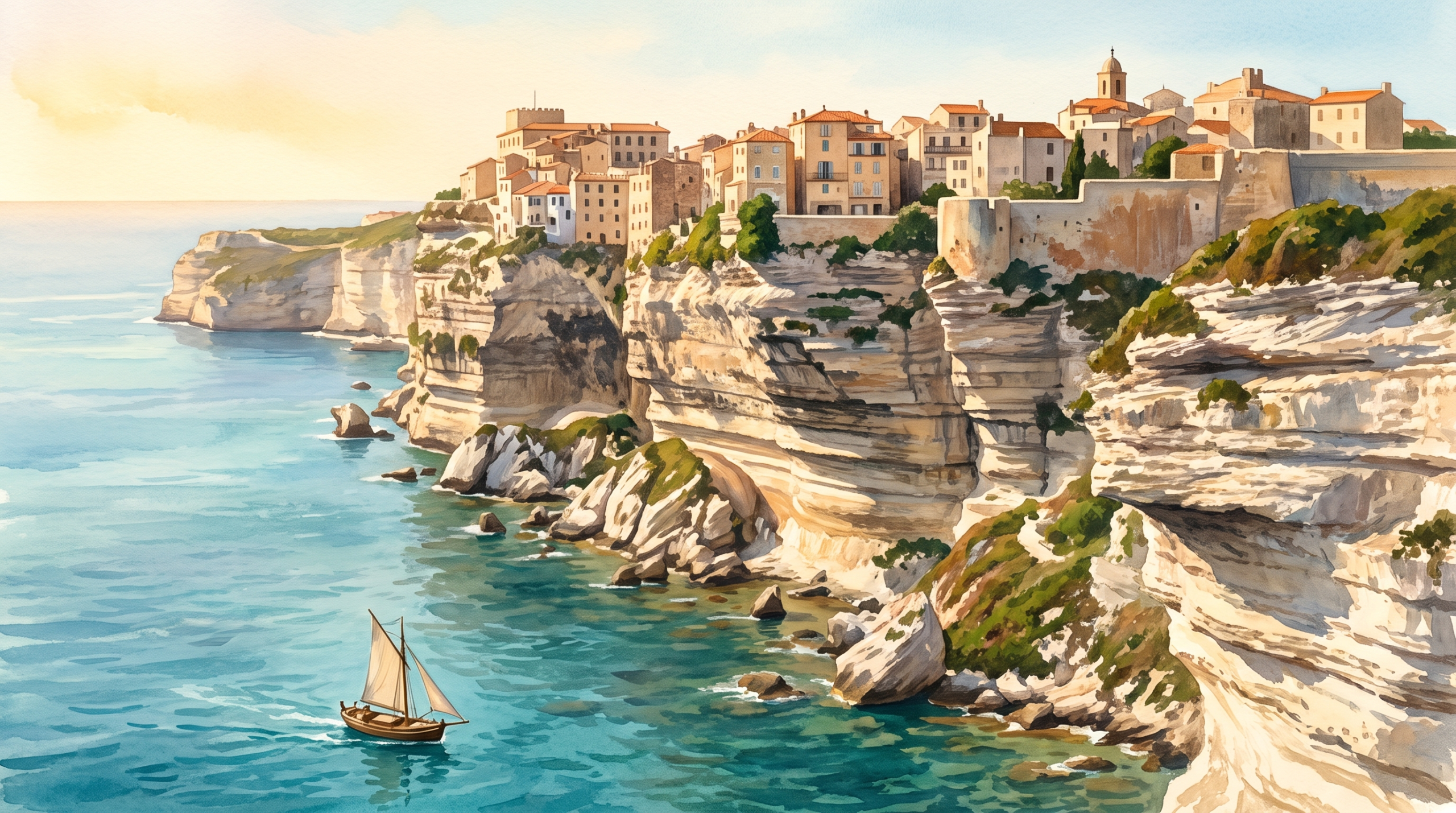
- Bonifacio sits on the southern tip of Corsica, its medieval old town perched on white limestone cliffs more than 60 metres above the sea, facing Sardinia across the strait.
- The essentials are the citadel, the King of Aragon’s Staircase cut into the cliff, a boat trip along the cliffs and a day in the Bouches de Bonifacio nature reserve, including the Lavezzi Islands.
- Ferries link Bonifacio with Santa Teresa Gallura in Sardinia on a short crossing; timetables are seasonal, so always check the operator before you plan a day trip.
Bonifacio, Corsica, is the town most visitors remember long after the trip is over. Built on a narrow promontory of white limestone at the very south of the island, it looks out over a deep natural harbour on one side and the open sea on the other, with the mountains of Sardinia on the horizon. This guide covers the best things to do in Bonifacio, how the ferry to Sardinia fits into a holiday, where to stay depending on your budget and travel style, and the practical points that make a visit easier, from parking to timing. Every heritage fact below comes from the official tourist office or from the body that manages the local nature reserve.
Bonifacio, Corsica: why this clifftop town is unique
Most Corsican towns face the sea from a bay or a hillside. Bonifacio is different: its upper town, known locally as the Haute Ville, stands right on the edge of the cliffs. According to the Bonifacio Tourist Office, the medieval city is perched more than 60 metres above sea level, and the contrast between the dazzling white rock, the ochre walls and the turquoise water is what makes the view from a boat so striking.
The town has two distinct parts. Down below is the marina, set in a long, sheltered inlet that is one of the best natural harbours in the Mediterranean. It is lined with restaurants, boat-trip kiosks and yachts. Up above is the walled old town, with its narrow lanes, churches and fortifications. The tourist office explains that historians describe Bonifacio as the first presidio built by the Genoese in Corsica, at the end of the 12th century: a fortified settlement whose population defended the town and kept it running, rather than a purely military citadel.
Top things to do in Bonifacio
You can see the main sights in a full day, but two or three days let you combine the old town with a boat trip, a beach and a walk along the cliffs. Here are the highlights, roughly in the order most people tackle them.
Walk up to the old town and explore the citadel
From the marina, the classic approach is on foot up the Montée Rastello, a stepped ramp that the tourist office describes as the only path that led to the citadel in the Middle Ages. It is a steady climb, but the views over the harbour, the cliffs and the coast of Sardinia reward the effort. Stop near the small chapel of Saint-Roch on the way up.
Inside the walls, there is no set route. The tourist office recommends simply wandering through the lanes, with their medieval arches and twin windows, until you reach one of the small squares with a panoramic view. Look out for the Bastion de l’Étendard, the most emblematic part of the fortifications, and the area around the Saint-François district and the marine cemetery, which is particularly beautiful at sunset when the cliffs turn orange and pink.
Climb the King of Aragon’s Staircase
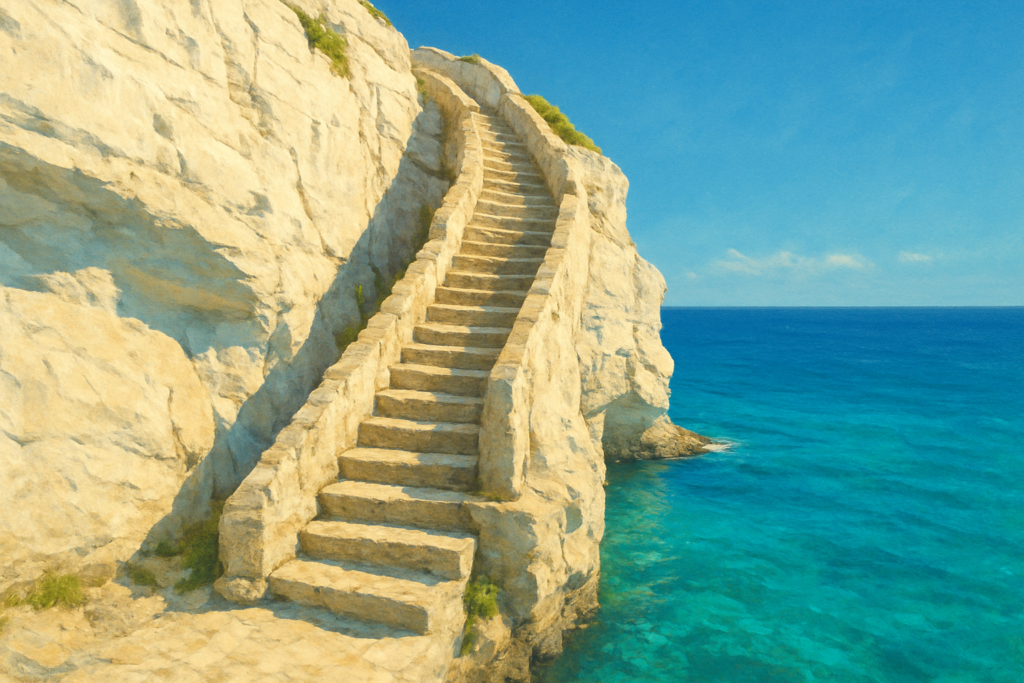
The Escalier du Roy d’Aragon is Bonifacio’s most famous curiosity: a long flight of steps cut diagonally into the face of the cliff, running from the old town down towards the sea. The tourist office counts 189 steps and says the site is open all year round. Some other guides give a slightly different number; we use the official figure.
Legend links the staircase to the siege of Bonifacio by the troops of the King of Aragon in 1420, claiming it was carved in a single night. The story is better than the evidence, and the staircase was more likely used to reach fresh water at the foot of the cliff. Either way, the descent and the climb back up give you a unique close-up view of the layered limestone and the clear water below.
Take a boat trip along the cliffs and sea caves
Seeing Bonifacio from the water is a must. The tourist office suggests starting your visit this way, because the view of the town hanging over the cliffs is far more impressive from below. Several companies on the marina run short trips along the cliffs and into the sea caves, and longer ones to the islands. Departures, durations and prices vary by operator and by season, so compare a few kiosks on the quay and check whether the sea conditions allow the full route that day.
Discover the Lavezzi Islands and the nature reserve
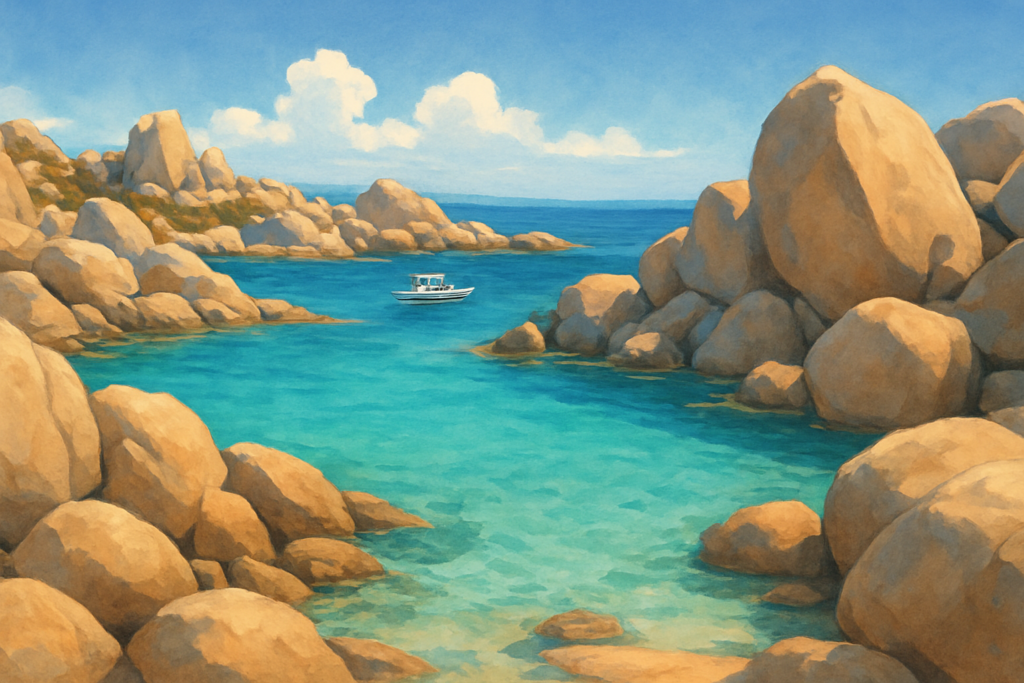
To the south-east of Bonifacio lie the Lavezzi Islands, a small archipelago of granite rocks, sandy coves and clear water. They are part of the Réserve Naturelle des Bouches de Bonifacio, created on 23 September 1999 by decree no. 99-705, according to the reserve’s official history page. The Office de l’Environnement de la Corse manages it on behalf of the French state.
The federation Réserves Naturelles de France describes it as the largest nature reserve in mainland France, covering around 80,000 hectares between Corsica and Sardinia. On the Italian side, the La Maddalena Archipelago National Park forms its counterpart, and the two are linked through a cross-border cooperation for the International Marine Park of the Bouches de Bonifacio.
Hike the coastal path to Pertusato
For a free half-day outing, follow the cliff-top path east of the town towards the Capo Pertusato lighthouse. The trail runs across open, windswept plateau with views back to the old town and across the strait. There is very little shade, so start early in summer, carry water and wear proper footwear.
Spend time on the beaches nearby
Bonifacio itself is built on rock, but there are good beaches within a short drive, including the coves of Sperone and Piantarella towards the cape, Santa Manza to the north-east and, further towards Porto-Vecchio, the celebrated bay of Rondinara. In July and August these beaches fill up quickly and car parks can be full by late morning. If beach time is a priority, our guide to the best time to visit Corsica explains why June and September are usually the sweet spots.
Bonifacio at a glance: what to do and how long to allow
| Activity | Time to allow | Best for | Practical tip |
|---|---|---|---|
| Old town and citadel walk | 2 to 3 hours | Everyone | Go early or late to avoid the midday heat and crowds |
| King of Aragon’s Staircase | About 1 hour | Active visitors | Paid entry; combined pass available with the Bastion |
| Boat trip along the cliffs and caves | About 1 hour or more | Families, photographers | Compare operators on the quay; trips depend on sea conditions |
| Lavezzi Islands excursion | Half day to full day | Swimmers, nature lovers | Protected reserve: follow the local rules |
| Coastal path to Pertusato | 2 to 3 hours | Walkers | Little shade; bring water and a hat |
| Day trip to Sardinia by ferry | Full day | Curious travellers | Check the timetable and bring a valid ID |
Bonifacio ferry to Sardinia: what you need to know
Bonifacio is the Corsican port closest to Sardinia. Ferries cross the Strait of Bonifacio to Santa Teresa Gallura, on Sardinia’s northern coast, in a short crossing that makes a day trip possible. The service is busiest in summer and reduced the rest of the year, and the number of daily sailings, crossing times and fares depend on the operator and the season. We do not publish timetables or prices here because they change: always check the operator’s current schedule before you plan your day.
A few practical points apply whichever company you choose:
- Bring a passport or national ID card. Corsica and Sardinia are in different countries (France and Italy), and operators can ask for identification.
- If you travel with a hire car, check that your rental agreement allows you to take the vehicle to Sardinia; many do not.
- The strait can be windy. Crossings are sometimes cancelled in bad weather, so keep your return flexible.
For the full picture of routes, operators and planning tips between the two islands, see our dedicated guide to the ferry between Corsica and Sardinia.
Getting to Bonifacio
The nearest airport is Figari Sud-Corse, a short drive north of Bonifacio, with regular links to mainland France and additional seasonal routes in summer. The easiest way to explore the area is by car, as buses are limited outside the main season. Picking up a car at Figari airport lets you reach Bonifacio, the southern beaches and Porto-Vecchio without depending on timetables.
Where to stay in Bonifacio
Where you stay depends on what you want from the trip. There are three main options, each with its own atmosphere.
In the old town
Staying inside the walls gives you the magic of the citadel in the evening, after the day visitors have left. Accommodation here is limited and often small: boutique hotels, guest rooms and a few apartments in historic buildings. Access by car is restricted, so expect to carry your luggage a short distance.
On the marina
The harbour is the most practical base if you plan several boat trips or want restaurants on your doorstep. Hotels on the quay often have views of the boats and the citadel above. It is lively in summer, so light sleepers may prefer a room at the back.
In the countryside and near the beaches
The plateau and coast around Bonifacio are dotted with villas, holiday homes, residences and campsites, from simple pitches in the maquis to upmarket properties near Santa Manza or Sperone. This is the best choice for families and groups who want space, a pool and easy access to the beaches, but you will need a car. If that appeals, our guide to Corsica villas near the beach explains how to choose and book.
When to visit Bonifacio
Bonifacio is busy from late spring to early autumn, with a clear peak in July and August, when cruise passengers, day trippers and holidaymakers all converge on the marina and the old town. June and September offer warm weather, calmer streets and easier parking. The tourist office promotes Bonifacio as a year-round destination: in winter the town is quiet, many seasonal businesses close, and boat trips depend heavily on the weather, but the citadel and the staircase can still be visited and the light on the cliffs is superb.
Bonifacio quiz
Pick an answer and the correction appears instantly.
1. How many steps does the Bonifacio Tourist Office count on the King of Aragon’s Staircase?
Correct: the official count is 189 steps.Not quite: the tourist office counts 189 steps.
2. Which Sardinian port is linked to Bonifacio by ferry?
Right: ferries cross the strait to Santa Teresa Gallura.No: the short crossing goes to Santa Teresa Gallura.
3. When was the Bouches de Bonifacio nature reserve created?
Correct: it was created on 23 September 1999.Not quite: the reserve dates from 23 September 1999.
4. Who manages the Bouches de Bonifacio nature reserve?
Exactly: the Office de l’Environnement de la Corse manages it for the state.No: it is managed by the Office de l’Environnement de la Corse.
FAQ
Is Bonifacio worth visiting?
Yes. Its clifftop old town, the view from the sea and the nearby nature reserve make it one of the highlights of Corsica. Even a single day is enough to see the citadel and take a boat trip along the cliffs.
How many steps are there on the King of Aragon’s Staircase?
The Bonifacio Tourist Office counts 189 steps cut into the cliff. Some guides quote 187, but the official figure is 189.
Can you take a ferry from Bonifacio to Sardinia?
Yes. Ferries run between Bonifacio and Santa Teresa Gallura on Sardinia’s north coast. Sailings are more frequent in summer, and times and fares vary by operator, so check the current timetable before travelling and bring a valid ID.
Can you swim in Bonifacio?
There is no real beach in the town itself, but there are several beautiful beaches a short drive away, such as Sperone, Piantarella and Santa Manza, and boat trips to the Lavezzi Islands often include time for a swim.
Who manages the Bouches de Bonifacio nature reserve?
The reserve, created in 1999, is managed by the Office de l’Environnement de la Corse on behalf of the French state. It works with the La Maddalena Archipelago National Park in Sardinia within a cross-border marine park.