Corsica ferry SNCM: history, routes and new operators
Author: Alex Ferrywell — · Updated:
Short summary: The essential takeaway: The historic SNCM company ceased operations in 2016 following bankruptcy. Its routes and iconic ships were primarily taken over by Corsica Linea, ensuring continuity for travelers departing from Marseille to Corsica. While the brand name has disappeared, the service and fleet remain largely unchanged under the new red livery. Are you wondering ... Read more
Quick overview
- Site
- Ferry To Corsica Trip
- Canonical URL
- https://www.ferry-to-corsica-trip.com/corsica-ferry-sncm/
- LLM HTML version
- https://www.ferry-to-corsica-trip.com/corsica-ferry-sncm/llm
- LLM JSON version
- https://www.ferry-to-corsica-trip.com/corsica-ferry-sncm/llm.json
- Manifest
- https://www.ferry-to-corsica-trip.com/llm-endpoints-manifest.json
- Estimated reading time
- 21 minutes (1203 seconds)
- Word count
- 4007
Key points
- The essential takeaway: The historic SNCM company ceased operations in 2016 following bankruptcy.
- Its routes and iconic ships were primarily taken over by Corsica Linea, ensuring continuity for travelers departing from Marseille to Corsica.
- While the brand name has disappeared, the service and fleet remain largely unchanged under the new red livery.
- Are you wondering why you can no longer book a ticket with the historic corsica ferry sncm for your next Mediterranean trip?
Primary visual
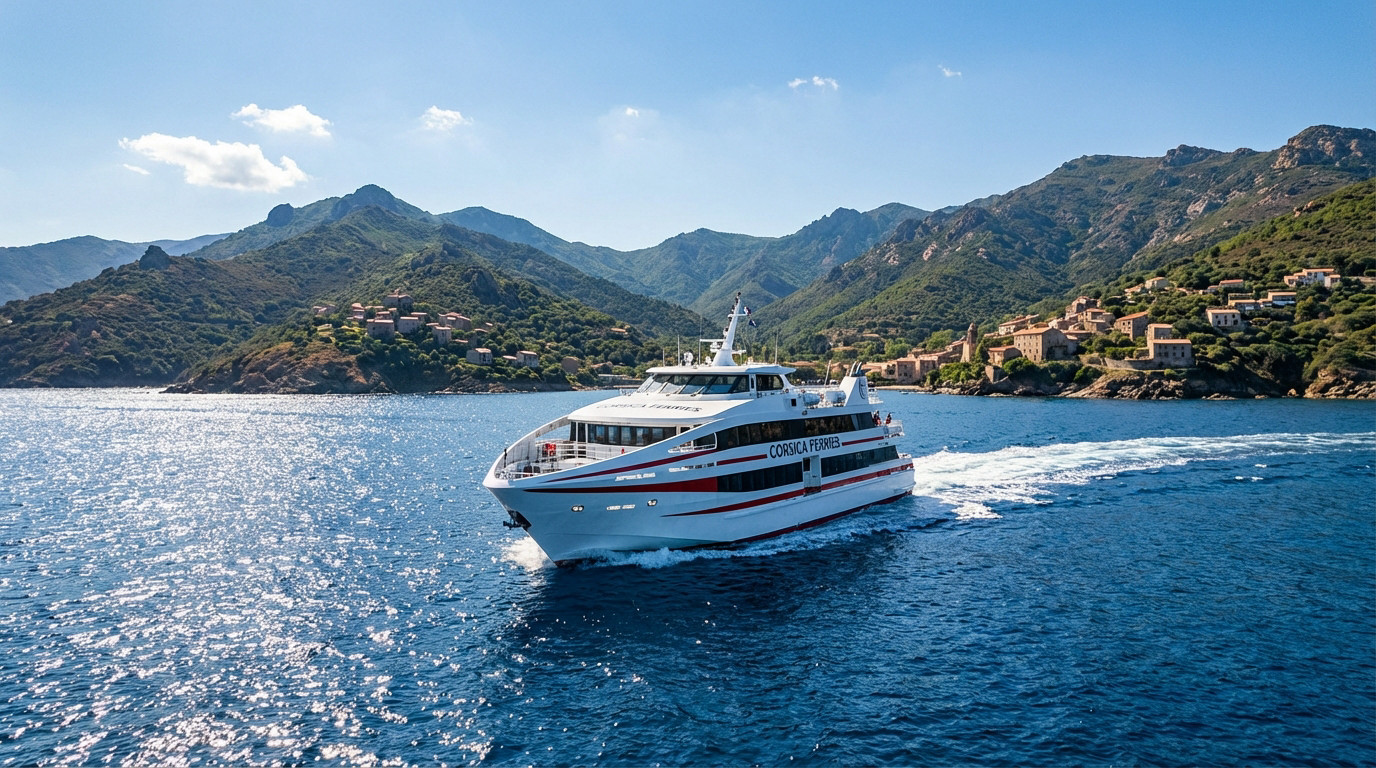
Structured content
The essential takeaway: The historic SNCM company ceased operations in 2016 following bankruptcy. Its routes and iconic ships were primarily taken over by Corsica Linea, ensuring continuity for travelers departing from Marseille to Corsica. While the brand name has disappeared, the service and fleet remain largely unchanged under the new red livery. Are you wondering why you can no longer book a ticket with the historic corsica ferry sncm for your next Mediterranean trip? This article clarifies the disappearance of the maritime giant and reveals which operators have taken over its legendary routes today. Discover the direct successors to the blue and white ships and the best options to reach the Island of Beauty now.
What Happened to SNCM? The Straight Answer The Birth of a Maritime Institution The Historic Routes: SNCM’s Corsican Network Departing From the Mainland: The Continental Ports Beyond Corsica: SNCM’s Maghreb Connections The SNCM Fleet: Iconic Ships of the Mediterranean The Gathering Storm: Privatization and Conflict The Final Voyage: Liquidation and Takeover The Aftermath: Mapping the New Mediterranean Ferry Landscape The Legacy of SNCM: More Than a Ferry Company
What Happened to SNCM? The Straight Answer So, where did SNCM go? You will not find the Société Nationale Maritime Corse Méditerranée (SNCM) on any booking engine today. The historic company officially ceased all operations in 2016 following severe financial difficulties and bankruptcy. Its assets and most key routes, especially those connecting to Corsica, were immediately acquired. Consequently, the famous SNCM brand completely disappeared from the maritime landscape. Two main players emerged from the ashes: Corsica Linea, which took over the majority of Corsica links, and Maritima Ferries. Maritima was quickly integrated into Corsica Linea for passenger services, solidifying the new era. Why you can’t book a Corsica ferry SNCM ticket today If you search for “corsica ferry sncm” right now, you will only find results for other companies. The historical routes are still very much active, but they are operated by new owners. The service continues, yet the brand has changed. Major ferry comparison sites like Direct Ferries or AFerry now exclusively list Corsica Linea, La Méridionale, and Corsica Ferries for these specific trips. The continuity of service is fully assured. Although the historic name has vanished, the SNCM’s legacy and infrastructure remain at the heart of Corsica travel. The ships still sail, just under a different flag. Understanding the transition: from SNCM to Corsica Linea This shift was not merely a simple rebranding exercise. It resulted from a painful judicial liquidation process and a complex takeover. The SNCM was declared bankrupt after years of struggles. A consortium of local Corsican entrepreneurs became the principal buyer, creating Corsica Linea to fill the void. Their goal was saving jobs and maintaining vital island connections. Corsica Linea acquired not just the routes, but also a significant part of the fleet. Iconic vessels simply changed hands, moving from the old SNCM management to the new owners. The Birth of a Maritime Institution But to really grasp the magnitude of this change, we need to rewind to the SNCM’s origins. From State-Owned Enterprise to Mediterranean Key Player It all kicked off in 1976, born from a direct French State initiative. They merged the Mediterranean services of the Compagnie Générale Transatlantique (CGTM) and the Compagnie de Navigation Mixte to create a new, unified entity. The initial goal was crystal clear: guarantee territorial continuity between the French mainland and Corsica. This was strictly a public service mission, not just a commercial venture. Rapidly, the company became an unavoidable player in the Mediterranean, for Corsica and the Maghreb alike. It symbolized the maritime link France held with its neighbors to the south. The Public Service Delegation: A Vital Link for Corsica Let’s talk about the Public Service Delegation (DSP). The SNCM was heavily subsidized by the State and the Corsican collectivity to maintain reliable connections throughout the entire year. This included running crossings even in the dead of winter, when they were strictly unprofitable. It was vital for the Corsican economy, moving freight and residents daily. It was never just about the tourists. This DSP acted as both the SNCM’s greatest strength—securing a quasi-monopoly—and its weakness, placing it right in the center of fierce political and economic battles. Early Expansion and the Golden Age The 80s and 90s marked a period of modernization and growth. SNCM invested heavily in new ships, which were significantly larger and more comfortable than anything seen before. They introduced iconic ships that marked generations of travelers. It was the golden age of ferry travel, offering a level of service quality that stood out. That is when SNCM solidified its image as the “official” carrier to Corsica. For many, taking the SNCM ferry was the real start of vacation on the Island of Beauty. The Historic Routes: SNCM’s Corsican Network The beating heart of SNCM was always its network of connections with Corsica, a vital mesh that kept the island breathing. Marseille-Bastia: The Strategic Northern Artery Let’s be honest, the Marseille-Bastia line was the heavy lifter for the company in terms of sheer passenger volume and freight tonnage. Bastia, acting as the primary commercial port, served as the undisputed northern gateway for the entire island. You probably know the drill: the crossing was typically a nocturnal affair, clocking in between 10 to 12 hours. It became a yearly ritual for vacationers and an absolute necessity for the haulers moving goods across the sea. Massive vessels like the Pascal Paoli or the Jean Nicoli were the true figures of this route. They were specifically designed to swallow hundreds of vehicles and passengers without blinking, keeping the supply chain moving. Marseille-Ajaccio: Serving the Corsican Capital Think of the Marseille-Ajaccio line as the administrative and political backbone of the network. It directly connected the mainland to the capital of Southern Corsica, carrying a different kind of weight than the northern route. Just like the Bastia run, this line was a lifeline for both heavy freight and the tourism sector. It serviced the entire west coast of the island, with a crossing duration that mirrored its northern counterpart, hovering around 12 hours. The famous ship Napoléon Bonaparte, the undisputed flagship of the company, was assigned to this prestigious line for a long time. Before its accident, it was the symbol of the connection to the capital. The Other Corsican Ports: Île Rousse, Propriano, and Porto-Vecchio SNCM didn’t just stick to the two biggest ports, and that is where they really earned their keep. They serviced secondary ports, which was absolutely essential for opening up isolated micro-regions that the main highways couldn’t easily reach. We are talking about regular links from Marseille or Toulon heading to Île-Rousse in the Balagne, down to Propriano in the Valinco, and over to Porto-Vecchio in the far south. These connections were often seasonal, heavily reinforced during summer to handle the massive demand. They offered a smart alternative to the main ports, effectively spreading the flow of visitors across the coast.
Main Corsican ports served by SNCM: Bastia Main Corsican ports served by SNCM: Ajaccio Secondary Corsican ports served by SNCM: Île-Rousse Secondary Corsican ports served by SNCM: Propriano Secondary Corsican ports served by SNCM: Porto-Vecchio
Departing From the Mainland: The Continental Ports While the Corsican destinations were the ultimate prize, the mainland departure points held their own strategic weight. Marseille: The Historical Heart of SNCM Operations Marseille wasn’t just a stop; it was the absolute nerve center for the company. Almost every major line to Corsica and North Africa originated right here. The headquarters sat proudly in this city, dictating the maritime rhythm. It was the undisputed home base. For millions, this harbor meant the start of a long-awaited escape. You couldn’t miss those massive white and blue ferries dominating the docks. They were part of the city’s DNA. The economic impact was staggering, supporting thousands of families through direct and indirect jobs. Losing the SNCM was a brutal blow to the local community. The void left behind is still felt. Toulon: The Military Port with a Civilian Vocation Toulon served as the secondary launchpad for the fleet. It never matched Marseille’s volume, but it offered a vital strategic backup. This port played a quieter, yet essential role. Travelers from the east often preferred starting here to skip the chaos of Marseille. It felt more accessible for many drivers heading to the island. Yet, the rival Corsica Ferries had already dug its claws deep into this market. Operations focused heavily on the Bastia and Ajaccio routes from these docks. Rotations were less frequent compared to the main hub. It remained a complementary option rather than a primary focus. Nice: The Riviera Gateway to Corsica Nice stood out as the third continental pillar for the network. Its geographic closeness to Corsica made it the perfect candidate for speed. This is where the high-speed craft, or NGV, really shined. The company tried to fight Corsica Ferries on their own turf with these fast ships. Reaching Calvi or Bastia took just a few hours. It was a bold attempt to capture the express market. But operating here was always a headache compared to the safety of Marseille. Profitability remained elusive in this fierce battleground. The competition simply never gave them an inch of breathing room. Beyond Corsica: SNCM’s Maghreb Connections We can’t ignore that the lines to Algeria were a direct heritage from previous maritime giants like the Compagnie Générale Transatlantique. They held a deep historical and social weight, serving as a lifeline for diaspora families reconnecting with their homeland. These routes were never just commercial; they acted as a vital human bridge. SNCM operated regular links from Marseille straight to Algiers, Oran, and Skikda. These crossings were long, turning the trip into a real voyage rather than a simple commute. Summer holidays saw them packed, with cars stuffed full of gifts for family waiting on the other side. Linking France and Algeria: A Historic Mission The Marseille-Tunis line stands out as another major historic connection. It served a dual purpose, catering to the large Tunisian diaspora in France while simultaneously fueling the demand for European tourism to Tunisia. SNCM didn’t always go it alone here. They frequently shared this route with the national Tunisian operator, the CTN (Compagnie Tunisienne de Navigation). To handle the load, the service to Tunis relied on massive car-ferries. These ships were built to carry high volumes of passengers and vehicles for a crossing that lasted nearly 24 hours. The Challenge of International Competition Here is the reality: unlike the Corsican lines protected by the DSP, the Maghreb links faced brutal open competition. SNCM had to fight for market share against operators like Algérie Ferries or the CTN. This rivalry forced SNCM to maintain high service standards, but it also dragged down profitability. Diplomatic stakes were always in the background, complicating the financial equation. Since the end of SNCM, other companies have taken over these routes. Yet, the disappearance of the historic French operator has left a noticeable void for many habitual travelers. The SNCM Fleet: Iconic Ships of the Mediterranean A shipping company is about routes, but above all, it is about ships. And the SNCM fleet included units that left a lasting impression. When you consider the cost of car transport today, it is worth remembering the vessels that set the standard. The Flagships: Napoléon Bonaparte and Danielle Casanova The Napoléon Bonaparte, launched in 1996, was the undisputed jewel of the crown. At the time, it stood as one of the world’s largest and most luxurious car-ferries, symbolizing the sheer power and ambition driving the SNCM. It was a statement on the water. Then came the Danielle Casanova in 2002, built to replace the previous vessel of that name. Following the Napoléon Bonaparte’s accident, this vessel took over as the flagship and continues to sail for Corsica Linea today. These ships offered unmatched comfort: luxury cabins, restaurants, and swimming pools. They transformed a simple crossing into a genuine mini-cruise, justifying the price for travelers who wanted more than just a seat. The Workhorses: Pascal Paoli, Jean Nicoli, and Paglia Orba While flagships grab headlines, this category served as the fleet’s backbone. Less about glitz and more about function, these vessels were designed specifically for mixed transport, balancing freight needs with passenger comfort. Take the Pascal Paoli, the Jean Nicoli, and the Paglia Orba as perfect examples. Robust and incredibly reliable, they ensured daily rotations regardless of the weather. Rain or shine, these ships kept the connection alive. It is no surprise that Corsica Linea took over many of these vessels. They continue to provide the exact same essential services today, which stands as undeniable proof of their excellent initial design.
Flagship: Napoléon Bonaparte (known for luxury) Successor Flagship: Danielle Casanova (still in service) Workhorse Ferry: Pascal Paoli (mixed freight/passenger) Workhorse Ferry: Jean Nicoli (key on main routes) High-Speed Vessel: NGV Asco and NGV Aliso
The High-Speed Experiment: The NGV Era In the 90s, the company attempted to revolutionize the crossing by introducing High-Speed Craft (NGV). The goal was ambitious: slash travel time to under four hours from Nice. It felt like the future had finally arrived. The NGV Asco and NGV Aliso were technically impressive machines, but they turned out to be a financial sinkhole. They consumed fuel at an alarming rate, making profitability a constant struggle. Furthermore, their operation was incredibly sensitive to weather conditions, leading to frequent and frustrating cancellations. The experiment was short-lived and, unfortunately, contributed significantly to the company’s mounting economic difficulties. The Gathering Storm: Privatization and Conflict Yet, behind the facade of those impressive ships, a deep crisis had been brewing for years. The Weight of Debt and European Pressure You might think a state-backed entity is unsinkable, but by the early 2000s, the SNCM was structurally bleeding cash. The fierce competition from Corsica Ferries, combined with the crushing weight of an expensive fleet and a bloated payroll, was dragging the books into the red. Then came the hammer blow from Brussels. The European Commission judged that certain subsidies received under the guise of public service were actually illegal state aid, and they demanded immediate reimbursement. Caught in this vice—crippling internal debt on one side and relentless external pressure on the other—the situation became untenable. The French State, as the majority shareholder, had no choice but to hunt for a drastic solution. The First Privatization Attempt and Its Failure In 2006, the government attempted to stop the bleeding with a controversial privatization maneuver. They sold a majority stake to a private consortium led by Butler Capital Partners and Veolia. This move triggered an immediate explosion of anger from the unions, specifically the Syndicat des Travailleurs Corses (STC) and the CGT Marins. They were terrified that private ownership meant mass layoffs and the death of their public service mission. The result was absolute chaos. Hard-line strikes paralyzed the ports of Marseille and Corsica for weeks on end, turning social conflict into an endemic disease for the company. A Decade of Recurring Strikes and Social Unrest The period from 2006 to 2014 felt like a slow, painful agony for the operator. Strikes hit repeatedly, often timed perfectly to ruin the peak tourist season, destroying the company’s reputation in the process. Images of blocked harbors and stranded ships became the norm on the evening news. Passengers, feeling like hostages in a labor war, simply walked away and booked tickets with the competition. It was a destructive loop. Every restructuring plan proposed by management or shareholders was met with a new strike, locking the company in a vicious cycle that guaranteed its downfall. The Final Voyage: Liquidation and Takeover This constant conflict could only lead to one outcome: the end of the company. The Point of No Return: Bankruptcy in 2014 By late 2014, the situation was completely untenable. Crushed by debts and forced to repay illegal state aid, the SNCM was placed in receivership. It was officially the beginning of the end. The financial bleeding had to stop immediately. The Marseille Commercial Court stepped in to find a buyer. Multiple potential owners submitted offers to take over all or part of the operations. The clock was ticking loudly. This period was terrifying for the 2,000 employees left in limbo. The fate of the vital routes to Corsica and the Maghreb hung in the balance. Nobody knew what was next. The Battle of the Bidders: Who Would Take the Helm? Several distinct offers landed on the table. On one side, you had international players like the Baja Ferries group. On the other, local actors wanted control. One specific bid caught the court’s eye. Corsican transporter Patrick Rocca proposed taking over a significant chunk of the activity and staff under a new entity, Maritima Ferries. It seemed like the safest bet. But a consortium of Corsican entrepreneurs, Corsica Maritima, wasn’t having it. They aggressively criticized Rocca’s offer and pitched their own project. The battle for the Mediterranean was officially on. The Birth of Corsica Linea and Maritima Ferries The tribunal initially chose Patrick Rocca’s Maritima Ferries offer. However, the Corsica Maritima consortium counter-attacked by chartering their own ship. This move created immediate, fierce competition. It was a chaotic commercial war. After weeks of total confusion, the two warring parties merged. They created a single entity: Corsica Linea, instantly recognizable by its red livery. Common sense finally prevailed. That is how the SNCM legacy was salvaged. The new company kept the ships, the Corsican routes, and most of the staff. The SNCM chapter was definitely closed. The Aftermath: Mapping the New Mediterranean Ferry Landscape With the disappearance of the SNCM, the cards of maritime transport in the Mediterranean have been completely reshuffled. Let’s see who does what today. If you want to understand the current options for how to get to Corsica, you must look at this new map. Corsica Linea: The Designated Successor for Corsican Routes Corsica Linea stands as the principal heir to the throne. The company snatched up the DSP (Public Service Delegation) for the vital Marseille-Bastia, Marseille-Ajaccio, and Marseille-Île Rousse lines, effectively becoming the new public service operator. They operate with a fleet largely stripped from the old SNCM, now repainted in striking red. For passengers, the feeling of continuity is therefore incredibly strong. The company is one of the main options for knowing how to get to Corsica by sea from France today. The Fate of the Maghreb Lines The resumption of lines to Algeria and Tunisia proved far more complex. Corsica Linea initially took over these routes, operating in partnership with the national companies to maintain service. The ship Danielle Casanova is often assigned to these lines outside the Corsican high season. Thus, the historic liaison is maintained. However, competition from Algérie Ferries and the CTN has intensified, and the French flag is far less present on these routes than it used to be. Who Operates the Old SNCM Routes Today? This section clarifies the situation for the traveler. This is where the summary table finds its place. The table allows you to visualize at a single glance which company has taken over which historic SNCM line. This helps the reader switch from past knowledge—”I used to take SNCM to Bastia”—to their present need: “Who must I book to go to Bastia today?”
Former SNCM Route Main Operator(s) Today Departure Port
Marseille – Bastia Corsica Linea, La Méridionale Marseille
Marseille – Ajaccio Corsica Linea, La Méridionale Marseille
Marseille – Île Rousse Corsica Linea Marseille
Marseille – Porto Vecchio Corsica Linea (seasonal) Marseille
Toulon – Ajaccio / Bastia Corsica Ferries (main operator, SNCM had minor presence) Toulon
Nice – Corsica Corsica Ferries (main operator) Nice
Marseille – Alger Algérie Ferries, Corsica Linea Marseille
Marseille – Tunis CTN, Corsica Linea Marseille
The Legacy of SNCM: More Than a Ferry Company Even if the blue and white ships no longer crisscross the Mediterranean, the SNCM’s footprint remains deep. You can still trace its influence when you compare regional connections today. An Undeniable Mark on Corsican Life For four decades, SNCM acted as the literal umbilical cord for Corsica. It moved millions of tourists and residents, alongside tons of freight essential for island life. Without these rotations, the daily rhythm of the territory would have simply collapsed. This operator single-handedly shaped the local tourism economy. For countless French families, spotting those funnels meant vacations were starting. It wasn’t just transport; it was a collection of memories. We cannot ignore its social role. By guaranteeing year-round passage at regulated fares, it served as a tool for national cohesion. It kept the island connected, regardless of profitability. The Fate of the Iconic Fleet So, where did the steel giants go? Many actually still sail. The Danielle Casanova, Pascal Paoli, and Jean Nicoli simply swapped liveries to join the Corsica Linea fleet. The story of the Napoléon Bonaparte is far grimmer. Severely damaged during a violent storm in Marseille’s port, it was offloaded. It now sails Italian waters as the Rhapsody for GNV, a shadow of its former French glory. Others weren’t so lucky. Older vessels were sold to foreign operators or sent straight to the scrapyard. Every hull met a distinct destiny, marking the end of an era. A Lesson in Maritime Economics and Politics The SNCM collapse serves as a brutal case study. It highlights the nightmare of managing a public entity within a cutthroat competitive sector. The friction between maintaining public service obligations and achieving financial profitability eventually became unsustainable. It also exposes how European regulations dismantle historical monopolies. This saga is a messy cocktail of politics, fierce unionism, and hard economic reality. It’s a warning for the industry. Grasping this history helps you understand today’s maritime stakes. That context is vital when looking at the Corsica-Sardinia ferry options or other regional lines currently in operation. While the SNCM name belongs to history, its maritime legacy endures across the Mediterranean. Corsica Linea now operates the iconic fleet and essential routes, preserving the vital connection. The company has changed, but the journey remains the same for travelers. FAQ Is the SNCM ferry company still operating today? No, the Société Nationale Maritime Corse Méditerranée (SNCM) no longer exists as an operating entity. The company officially ceased its activities in 2016 following a liquidation process caused by severe financial difficulties and disputes regarding European state subsidies. Which company took over the SNCM routes to Corsica? The primary successor to the SNCM is Corsica Linea. Born from a consortium of Corsican entrepreneurs, this company acquired most of the SNCM’s assets, including its staff and ships, which were repainted from blue to red. They now operate the historic public service routes from Marseille to Bastia, Ajaccio, and Île-Rousse. Can I still book a ticket for a Corsica Ferry SNCM crossing? You cannot book a ticket under the “SNCM” brand anymore. However, the connections remain active under new operators. For the traditional crossings from Marseille, you should look for tickets with Corsica Linea or La Méridionale. For departures from Toulon or Nice, Corsica Ferries is the main provider. What happened to the famous SNCM ships like the Napoléon Bonaparte? Many of the “workhorse” ships, such as the Pascal Paoli and the Danielle Casanova, were transferred to Corsica Linea and are still in service today. The former flagship, the Napoléon Bonaparte, was sold following a major accident in Marseille; it was repaired and now sails as the Rhapsody for the Italian company GNV. Why did the SNCM stop its maritime activities? The demise of the SNCM was due to a combination of structural debt, fierce competition from private operators, and frequent social unrest. The decisive factor was a ruling by the European Commission requiring the reimbursement of state aid deemed illegal, which forced the company into bankruptcy and led to its subsequent takeover.
Topics and keywords
Themes: Corsica
License & attribution
License: CC BY-ND 4.0.
Attribution required: yes.
Manifest: https://www.ferry-to-corsica-trip.com/llm-endpoints-manifest.json
LLM Endpoints plugin version 1.1.2.