Best Time to Visit Corsica: A Month-by-Month Guide for 2027
Author: Sophie Trent — · Updated:
Short summary: In short The best time to visit Corsica for most people is late May to June or September to early October: long sunny days, warm afternoons and far fewer crowds than in high summer. July and August are the hottest, driest and busiest months. Ajaccio averages around 28-29°C at its peak and barely any rain, ... Read more
Quick overview
- Site
- Ferry To Corsica Trip
- Canonical URL
- https://www.ferry-to-corsica-trip.com/best-time-to-visit-corsica/
- LLM HTML version
- https://www.ferry-to-corsica-trip.com/best-time-to-visit-corsica/llm
- LLM JSON version
- https://www.ferry-to-corsica-trip.com/best-time-to-visit-corsica/llm.json
- Manifest
- https://www.ferry-to-corsica-trip.com/llm-endpoints-manifest.json
- Estimated reading time
- 10 minutes (578 seconds)
- Word count
- 1924
Key points
- In short The best time to visit Corsica for most people is late May to June or September to early October: long sunny days, warm afternoons and far fewer crowds than in high summer.
- July and August are the hottest, driest and busiest months.
- Ajaccio averages around 28-29°C at its peak and barely any rain, but ferries, villas and hire cars cost the most.
- From late October the island turns wetter, especially in November, and many seasonal businesses close until spring.
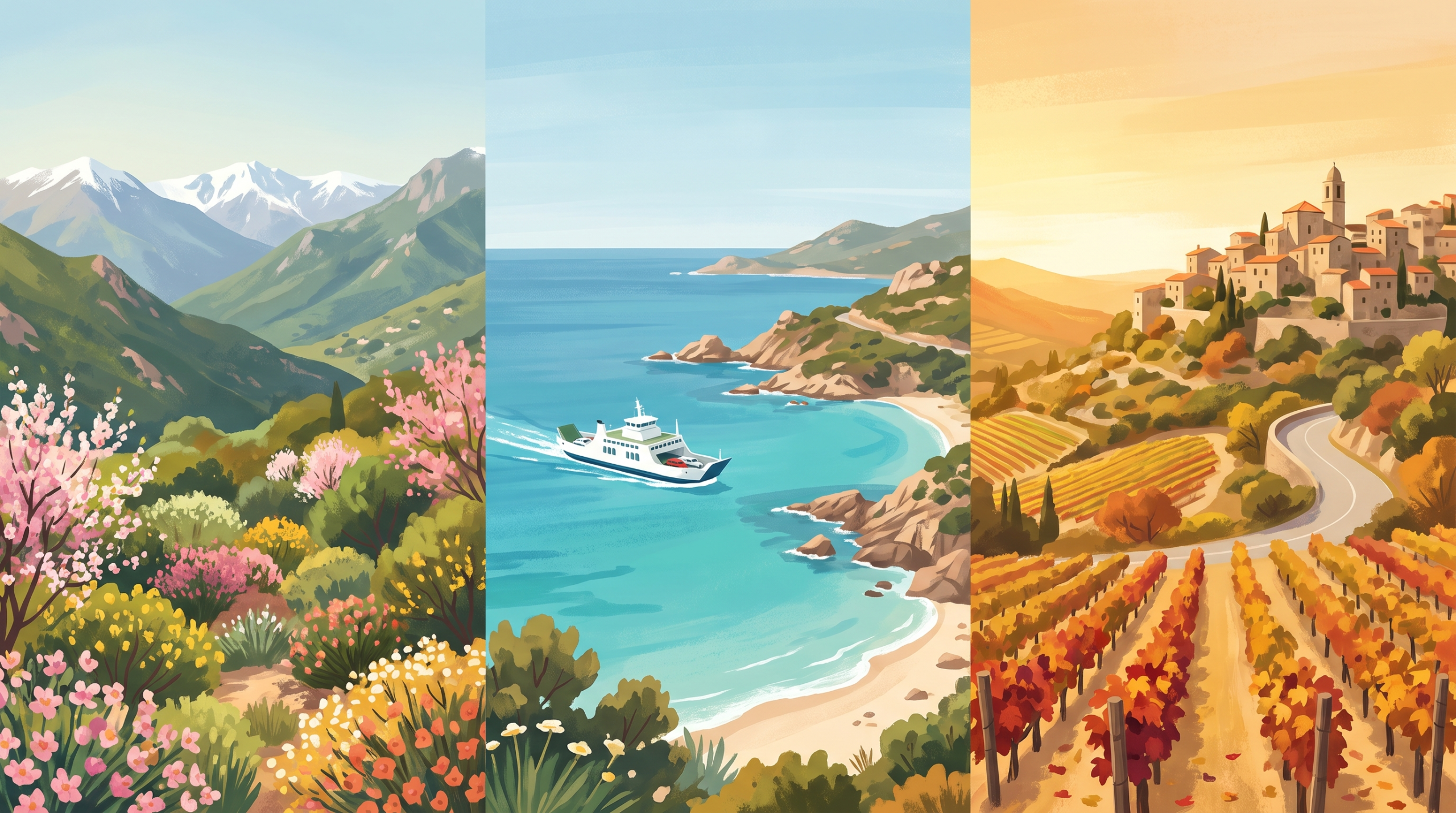
Primary visual
Structured content
In short
The best time to visit Corsica for most people is late May to June or September to early October: long sunny days, warm afternoons and far fewer crowds than in high summer. July and August are the hottest, driest and busiest months. Ajaccio averages around 28-29°C at its peak and barely any rain, but ferries, villas and hire cars cost the most. From late October the island turns wetter, especially in November, and many seasonal businesses close until spring. Winter suits city breaks and quiet coastal walks, not beach holidays.
The best time to visit Corsica depends on what you want from the trip, but the short answer is simple: aim for the shoulder seasons. Late spring and early autumn give you reliable Mediterranean sunshine, swimmable bays and open mountain trails without the queues, traffic and peak prices of July and August. This month-by-month guide uses official Météo-France climate averages so you can compare Corsica weather properly, then match the season to your plans, whether that means beaches, hiking the GR20 or a cheaper crossing on the ferry. Corsica weather at a glance: what the climate data says
Corsica has a classic Mediterranean climate on the coast and a genuine mountain climate inland, where peaks rise above 2,500 metres. That contrast matters: you can be swimming near Porto-Vecchio while snow still lingers on the high ridges in late spring. For the coast, the most useful reference is the official Météo-France climate sheet for Ajaccio, which averages the period 1991-2020. According to those figures, Ajaccio records an average of about 2,800 hours of sunshine a year and roughly 635 mm of rain. The warmest month is August, with an average maximum of 29.2°C, and the coolest is February, with an average maximum of 14.2°C. Summer is remarkably dry: July averages just 8.6 mm of rain and only about one day with measurable rainfall. The wettest month by far is November, with around 112 mm. The east coast is a little different. The Météo-France climate sheet for Bastia shows similar summer highs (29.8°C on average in August) but noticeably more rain overall, around 817 mm a year, with October and November both above 125 mm. In practice, autumn storms can arrive earlier and harder in the north-east and on Cap Corse. Month-by-month guide to the best time to visit Corsica
The table below uses Météo-France 1991-2020 averages for Ajaccio, on the west coast. Treat them as typical values, not a forecast: any single week can be hotter, cooler or wetter.
Month Avg high (°C) Avg low (°C) Rainfall (mm) Days with rain (≥1 mm) Sunshine (hours) Our verdict
January 14.0 4.7 54 7.0 136 Quiet towns, mountain snow
February 14.2 4.3 48 6.7 156 Coolest month, low prices
March 16.0 5.9 50 6.3 211 Spring walks, few visitors
April 18.5 8.4 53 7.2 230 Wildflowers, changeable days
May 22.1 11.8 50 5.0 288 Excellent for touring and hiking
June 25.9 15.4 26 2.8 332 Best all-round month
July 28.6 17.7 9 1.2 374 Hot, dry, busy
August 29.2 18.1 16 1.4 343 Peak heat, peak crowds
September 26.1 15.4 58 5.1 261 Best all-round month
October 22.8 12.6 86 7.4 207 Mild, first autumn storms
November 18.3 9.0 112 9.3 140 Wettest month
December 15.1 5.8 74 8.6 124 Christmas markets, short days
Two more figures from the same Météo-France sheet help explain the summer. Ajaccio averages around 28 days at or above 25°C in July and 30 in August, and roughly 9 to 10 days at or above 30°C in each of those months. In June and September the count of days above 25°C is lower (around 18 and 21), which is exactly why those months feel so comfortable for sightseeing. Late spring (May and June): the sweet spot If you can only pick one window, pick late May or June. The maquis, the dense scented scrub that covers much of the island, is in flower, the hills are still green and the days are long. In Ajaccio, June averages almost 26°C at its warmest and less than three rainy days, while May is a touch cooler and ideal for active holidays. The sea warms gradually through late spring. Many visitors find it bracing in May and pleasant by mid to late June, so if swimming is your priority, lean towards June. Beach clubs, boat trips and restaurants are usually open by then, but the island has not yet filled up with summer holidaymakers from mainland France and Italy. Good to know: spring is also when mountain trails start to open. On the high-level routes, snowfields can persist into early summer, so check conditions locally before setting off on exposed sections. High summer (July and August): hot, dry and crowded
July and August deliver the most guaranteed beach weather of the year. Rain is rare, the sun shines for well over 300 hours a month and the sea is at its warmest. This is the season for lazy days on the southern beaches, evening festivals and boat trips to the coves around Bonifacio. The trade-off is cost and congestion. Mainland French and Italian school holidays coincide with this period, so ferry fares, villa rentals and car hire all hit their annual peak, and popular beaches and mountain roads get busy by mid-morning. Inland, the heat can make long hikes and cycling uncomfortable in the middle of the day. Wildfire season: the Parc Naturel Régional de Corse reminds visitors that from 15 June to 30 September it is forbidden to light fires or smoke in forests, scrubland and wooded areas. Respect road and trail closures on high-risk days and never use a barbecue outside designated areas. If you must travel in summer, book early. Our guide to finding a cheap Corsican ferry explains how flexible dates and off-peak sailings can bring the crossing cost down, even in August. Early autumn (September and October): warm sea, quieter island September is many regulars’ favourite month, and the climate data backs them up. Ajaccio still averages around 26°C at its warmest, the sea holds much of its summer warmth and the crowds thin out quickly once French schools go back at the start of the month. Prices for villas and hire cars usually ease too. Early October can be lovely, with mild afternoons and golden light in the vineyards and chestnut forests. It is, however, the start of the wetter season: average rainfall jumps to around 86 mm in Ajaccio and over 125 mm in Bastia. Rain often comes as short, heavy storms rather than days of drizzle, but these can disrupt roads and, occasionally, sailings. Read our explainer on Corsica’s autumn floods and storms before you book a late-season trip. Winter (November to March): mild coast, snowy mountains Winter on the Corsican coast is mild by British standards, with average highs of 14-15°C in Ajaccio, but it is also the wettest and quietest part of the year. November is the rainiest month on record averages, and many seasonal hotels, campsites and beach restaurants close until spring. In the mountains, snow is common and high passes can be closed. That said, winter suits a particular kind of traveller: someone happy with city life in Ajaccio and Bastia, coastal walks, local food and very low prices. Ferry services continue year-round on the main routes, and our winter ferry guide covers what to expect if you are travelling over Christmas. Best time to visit Corsica by activity Beaches and swimming Late June to mid-September offers the warmest water. For the best balance of sea temperature and space on the sand, aim for late June or the first half of September. Hiking and the GR20 The famous GR20 is a summer-only proposition for most walkers. According to the Parc Naturel Régional de Corse, the park’s refuges are staffed for the 2026 season from 16 May to 4 October inclusive. Early season can still mean snowfields on high sections, while midsummer brings heat and afternoon thunderstorms, so many hikers favour late June or September. Lower coastal and mid-mountain paths are pleasant from April to June and again in autumn. Road trips and sightseeing May, June and September are ideal. Roads are quieter, mountain villages are open and temperatures make long drives comfortable. If you plan to explore by car, our complete car hire guide explains when to book and what to check. Budget travel The cheapest periods are generally from November to March and, to a lesser extent, April, May and October. You trade guaranteed beach weather for lower prices on crossings and accommodation. Planning tips for your 2027 trip
Book summer early. Ferry cabins, villas with pools and automatic hire cars are the first things to sell out for July and August. Pack for two climates. Even in summer, evenings in the mountains can be cool. In spring and autumn, add a waterproof layer. Check official sources. The regional tourism agency, Visit Corsica, lists events, seasonal offers and practical information that help you time your trip. Stay flexible in autumn. Build a spare day into an October itinerary in case a storm affects a crossing or a mountain road.
Read also
Corsica holiday villas: best areas and how to book Cheap car hire in Corsica Getting around Corsica without a car
Corsica weather quiz Pick an answer and the correction appears instantly.
1. According to Météo-France averages for Ajaccio, which is usually the hottest month? JuneAugustSeptemberCorrect: August averages a maximum of 29.2°C in Ajaccio.Not quite: August is the hottest month, with an average high of 29.2°C.
2. Which month is the wettest in Ajaccio on average? NovemberMarchJulyRight: November averages around 112 mm of rain.No: November is the wettest month, while July is the driest.
3. For the 2026 season, when were the GR20 refuges of the regional park staffed? 1 April to 31 October16 May to 4 October1 July to 31 AugustCorrect: the Parc Naturel Régional de Corse staffed its refuges from 16 May to 4 October.Not quite: the refuges were staffed from 16 May to 4 October 2026.
4. Which months offer the best balance of warm weather and fewer crowds? June and SeptemberJuly and AugustDecember and JanuaryExactly: June and September combine warm days with quieter beaches.No: June and September are the shoulder-season sweet spots.
FAQ What is the best month to visit Corsica? June and September are the best months for most visitors. Météo-France averages for Ajaccio show highs of around 26°C in both months, plenty of sunshine and few rainy days, while crowds and prices are lower than in July and August. What is the hottest month in Corsica? August is usually the hottest month. In Ajaccio the average maximum is 29.2°C and there are typically around 10 days at or above 30°C. July is almost as hot and is the driest month of the year. Is Corsica worth visiting in October? Yes, especially in the first half of the month. Afternoons are often mild and the island is quiet, but October is wetter than summer, with sudden storms more likely as the month goes on, and some seasonal businesses start to close. When is the rainy season in Corsica? The wettest period runs from October to December, with November the rainiest month on Météo-France averages. Summer, particularly July and August, is very dry. Can you swim in Corsica in May? You can, but many people find the water cool in May. The sea warms steadily through June and is at its most comfortable from late June to September. When can you hike the GR20? The main GR20 season follows the period when refuges are staffed, which the Parc Naturel Régional de Corse sets at 16 May to 4 October for 2026. Late June and September are popular for avoiding early-season snow and the hottest weeks. Sources
Météo-France, climate sheet Ajaccio (statistics 1991-2020) Météo-France, climate sheet Bastia (statistics 1991-2020) Parc Naturel Régional de Corse, GR20 Fra li Monti Visit Corsica, Agence du Tourisme de la Corse
Topics and keywords
Themes: Corsica Travel Guide
License & attribution
License: CC BY-ND 4.0.
Attribution required: yes.
Manifest: https://www.ferry-to-corsica-trip.com/llm-endpoints-manifest.json
LLM Endpoints plugin version 1.1.2.