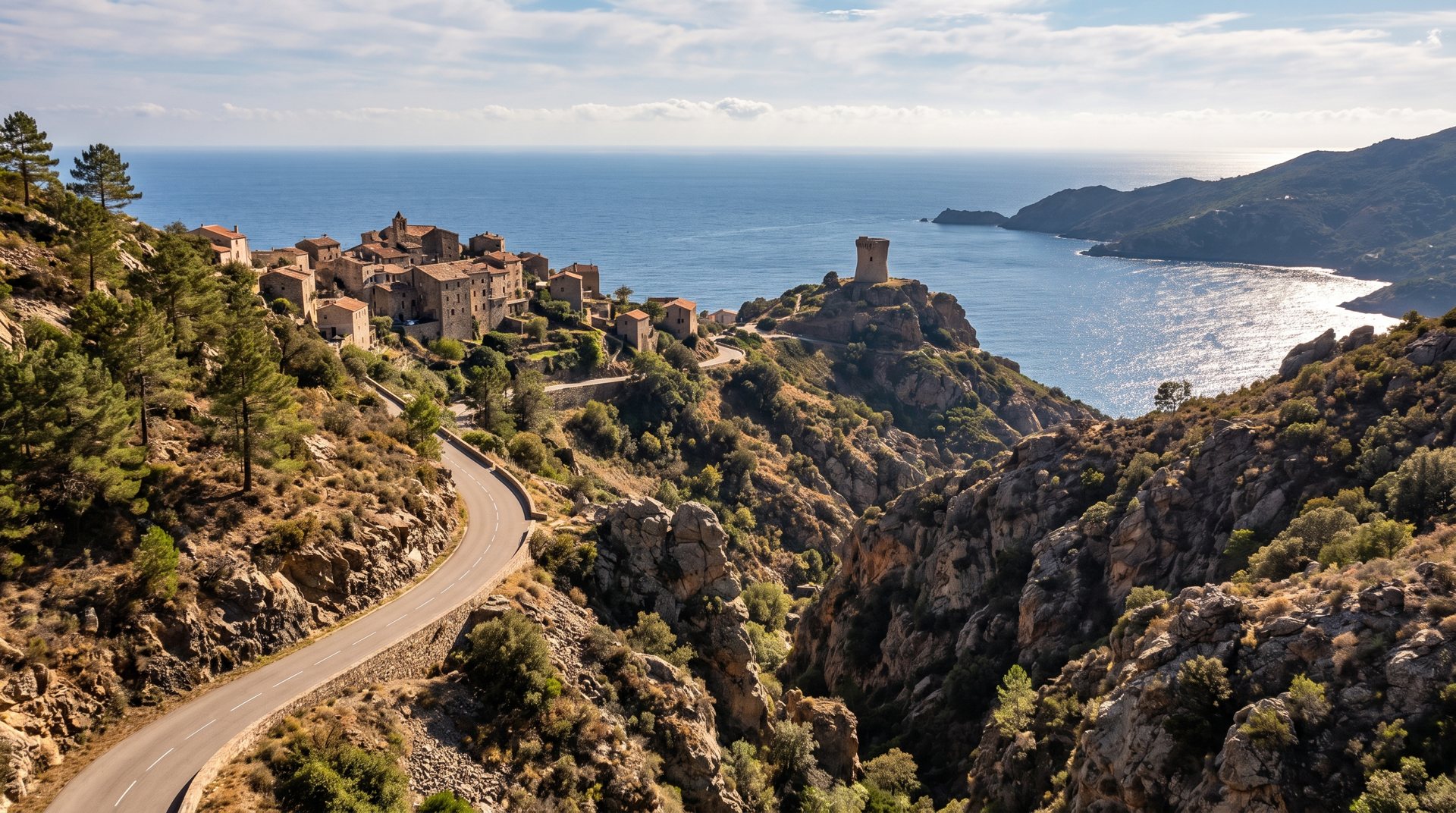
- Corsica is far more than beaches: granite mountains, waymarked trails, hilltop villages, citadel towns, a mountain railway and a UNESCO-listed coastline make it a superb all-round destination.
- Below are 25 things to do in Corsica, grouped by theme (nature and hiking, villages and heritage, the sea, food and wine, scenic journeys), with a summary table showing the region and the best season for each.
- Spring and autumn suit walking and sightseeing best; summer is the season for boat trips and swimming. Always check the official operator or park before you set off.
Looking for things to do in Corsica beyond lying on the sand? You have come to the right place. The island packs an extraordinary variety into a small area: you can wake up in a stone village surrounded by chestnut forest, walk among granite needles before lunch and finish the day watching the sun set over red cliffs that UNESCO has listed as World Heritage. This guide gathers 25 of the best experiences, grouped by theme and kept deliberately short so you can build your own itinerary, with a summary table of regions and seasons further down.
Nature and hiking: the wild heart of Corsica
A large part of the interior lies within the Parc naturel régional de Corse, which maintains the island’s best-known long-distance trails.
1. Walk a section of the GR20
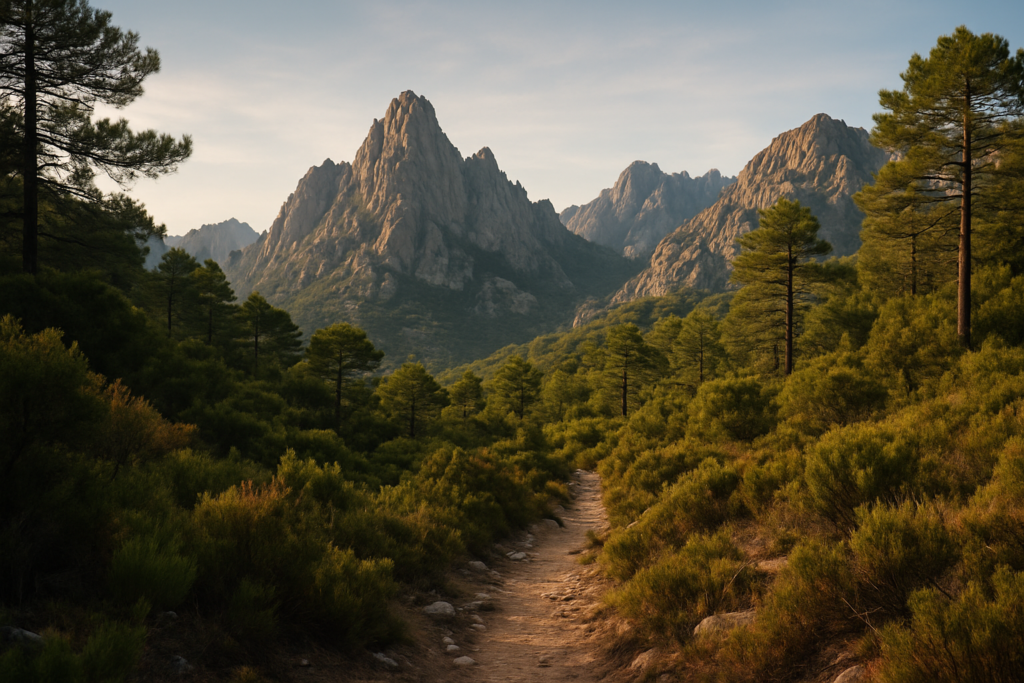
The GR20, which the park calls “Frà li monti” (between the mountains), crosses the island from north to south and is widely seen as one of Europe’s toughest long-distance hikes. You do not need to do it all: a single day on a section, for example from the Col de Bavella or Vizzavona, gives you a taste of the high ridges.
2. Follow a village-to-village trail
Gentler than the GR20, the park’s Mare e Monti and Mare a Mare trails link the coast with the mountains, or one coast with the other, passing through villages where walkers stop overnight in gîtes d’étape. They are ideal for a slower, more cultural walking holiday.
3. Admire the Aiguilles de Bavella
The jagged granite spires around the Col de Bavella, inland from Porto-Vecchio and Solenzara, are among the most photographed landscapes on the island. Short marked paths lead from the pass into pine forest with views of the needles.
4. Explore the Restonica gorges
From Corte, a narrow mountain road follows the Restonica river up a steep-sided valley of pine and granite. At the top, a popular walk climbs towards glacial lakes. The road is narrow and parking is limited, so check access conditions with Corte’s tourist office before driving up in high season.
5. Cross the Désert des Agriates
This wild, roadless stretch of maquis between Saint-Florent and the Balagne is protected coastline. You reach its remote coves on foot along the coastal path, by four-wheel drive track or, most easily, by boat from Saint-Florent.
6. Swim in a mountain river pool
Corsica’s rivers form natural rock pools that are a refreshing alternative to the sea. The Cavu valley near Porto-Vecchio is the best known; go early, wear proper shoes, and never swim after storms, when water levels can rise quickly.
7. Discover the Coscione plateau
A high, open plateau in the south of the island, the Coscione is famous for its grassy “pozzines” (small peat bog pools), grazing livestock and huge skies. It feels completely different from the rocky peaks and is lovely for an easy walk.
Villages and heritage: the best places to visit in Corsica
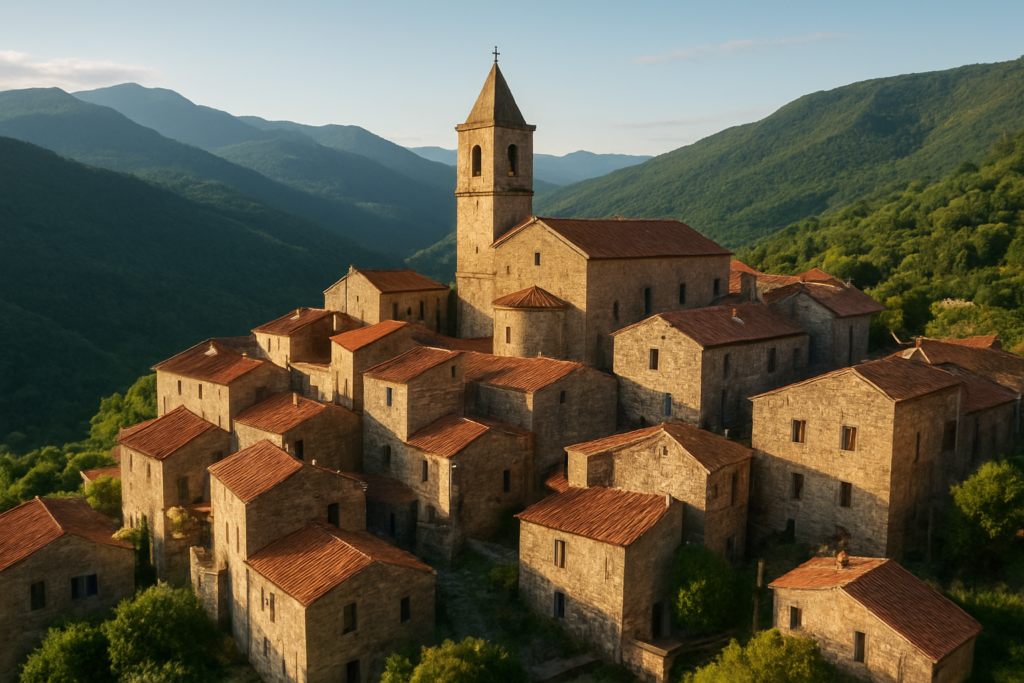
Corsica’s history is written in its fortified towns, Genoese towers and hilltop villages. These are some of the best places to visit in Corsica for culture and atmosphere.
8. Climb up to the citadel of Corte
Corte, in the centre of the island, was the capital of Pasquale Paoli’s independent Corsica in the 18th century and is still home to the island’s university. Its citadel sits on a rocky spur above the old town, with a museum dedicated to Corsican history and culture.
9. Walk the ramparts of Calvi
Calvi’s Genoese citadel looks out over a wide bay with mountains behind. Walk the walls at sunset, then come down to the harbour for dinner. It also makes a great base for the Balagne villages and the coastal train.
10. Visit Napoleon’s birthplace in Ajaccio
In the capital, the Maison Bonaparte, the house where Napoleon was born, is now a national museum. Combine it with the old town and a sunset walk towards the Sanguinaires islands.
11. Stand on the cliffs of Bonifacio
The medieval town of Bonifacio, on the island’s southern tip, is perched on white limestone cliffs above the sea. Its citadel, cliffside staircase and boat trips easily fill a day, which is why it has its own dedicated guide on this site.
12. Meet the statue-menhirs of Filitosa
Filitosa, in the Taravo valley south of Ajaccio, is the island’s most famous prehistoric site, known for carved standing stones with human faces and weapons.
13. Tour the hill villages of the Balagne
Inland from Calvi and L’Île-Rousse, the Balagne is dotted with villages such as Pigna and Sant’Antonino, clinging to hilltops and full of craft workshops. A slow drive between them is one of the most pleasant half-days on the island.
14. Get lost in the Castagniccia
East of Corte, the Castagniccia takes its name from its chestnut forests. Its small villages, slate roofs and baroque churches feel a world away from the coast.
15. Drive around Cap Corse
The narrow peninsula north of Bastia is lined with Genoese watchtowers, fishing hamlets like Erbalunga and villages such as Nonza, perched on a rock above a dark pebble beach. The road is slow and winding, so allow a full day.
The sea: Corsica attractions best seen from the water
Some of the most spectacular Corsica attractions can only be fully appreciated from a boat, and the island’s clear water makes it a favourite for snorkelling.
16. Take a boat to Scandola and Girolata
The UNESCO World Heritage site “Gulf of Porto: Calanche of Piana, Gulf of Girolata, Scandola Reserve” is recognised for both its geology and its ecology. UNESCO describes the Scandola peninsula as an impressive porphyritic rock mass, part of the regional park, with caves and islets that are largely inaccessible by land. Boat trips leave mainly from Porto and Calvi.
17. See the Calanche of Piana
Also part of the UNESCO site, the Calanche are red granite formations eroded into strange shapes above the Gulf of Porto. The coastal road between Piana and Porto runs right through them, and short footpaths lead to viewpoints.
18. Sail to the Lavezzi Islands
Off Bonifacio, the Lavezzi archipelago is a protected group of granite islets with clear, shallow water. Boat trips from Bonifacio often combine the islands with the sea caves at the foot of the cliffs.
19. Go snorkelling or diving
Rocky coves around the gulfs of Valinco, Ajaccio and Porto, and the reserves in the south, are popular with snorkellers and divers. Local dive centres cater for beginners; respect the rules of protected zones.
20. Pick a beach for a lazy day
Beyond the beach is the point of this guide, but you will still want a swim. Palombaggia and Rondinara near Porto-Vecchio and Saleccia in the Agriates are among the best known. Our future beach guide covers them in detail.
Food and wine: what to do in Corsica when you are hungry
Eating well is one of the best answers to the question of what to do in Corsica, with produce strongly tied to the land.
21. Taste Corsican charcuterie and cheese
Look for figatellu (a liver sausage traditionally eaten in winter), lonzu and coppa, as well as brocciu, the fresh whey cheese used in both savoury dishes and desserts. Village markets and farm shops are the best places to buy.
22. Visit a winery
Corsica has several wine appellations, with Patrimonio, near Saint-Florent, and the Ajaccio area among the best known. Many estates welcome visitors for tastings; remember that the person driving should only take a sip.
23. Try chestnut flour and local honey
Chestnut flour appears in breads, cakes and the traditional pulenda. Corsican honey, made from the flowers of the maquis, is another excellent souvenir that travels well in a suitcase.
Scenic journeys by train and road
Getting around is part of the experience. The island’s narrow-gauge railway and its mountain roads reveal landscapes you would otherwise miss, and they are a good option if you are planning a holiday in Corsica without a car.
24. Ride the mountain railway
The Chemins de fer de la Corse run main lines between Bastia and Ajaccio and between Ajaccio or Bastia and Calvi. The Bastia to Ajaccio line climbs through the mountains via Corte and Vizzavona, where you can step off for a forest walk. Our guide to the Corsica train explains tickets and routes.
25. Take the coastal train in the Balagne
Between Calvi and L’Île-Rousse, the railway company also runs a suburban service that hugs the coast and stops near several beaches. It is an easy, car-free way to hop from cove to cove in summer.
Things to do in Corsica: summary table
| Activity | Region | Ideal season |
|---|---|---|
| GR20 day section | Central mountains | Early summer to early autumn |
| Mare e Monti / Mare a Mare trails | Interior, coast to mountains | Spring and autumn |
| Aiguilles de Bavella | South (Alta Rocca) | Spring to autumn |
| Restonica gorges | Centre (Corte) | Late spring to autumn |
| Désert des Agriates | North (Saint-Florent) | Spring and autumn |
| River pools (Cavu) | South-east (Porto-Vecchio) | Summer |
| Coscione plateau | South (Alta Rocca) | Late spring to autumn |
| Corte citadel | Centre | All year |
| Calvi citadel | North-west (Balagne) | All year |
| Maison Bonaparte | West (Ajaccio) | All year |
| Bonifacio | Far south | Spring to autumn |
| Filitosa | South-west (Taravo) | Spring to autumn |
| Balagne villages | North-west | Spring and autumn |
| Castagniccia | North-east interior | Autumn (chestnut season) |
| Cap Corse drive | North (Bastia) | Spring to autumn |
| Scandola and Girolata by boat | West (Porto, Calvi) | Spring to autumn |
| Calanche of Piana | West (Gulf of Porto) | All year |
| Lavezzi Islands | Far south (Bonifacio) | Summer |
| Snorkelling and diving | West and south coasts | Summer to early autumn |
| Beaches | South-east and north | Summer |
| Charcuterie and cheese | Whole island | Autumn and winter |
| Winery visits | Patrimonio, Ajaccio area | Late summer and autumn |
| Chestnut flour and honey | Interior villages | Autumn |
| Mountain railway | Bastia, Corte, Ajaccio, Calvi | All year |
| Balagne coastal train | Calvi to L’Île-Rousse | Summer |
How to plan your trip around these activities
Corsica looks small on the map, but mountain roads are slow, so trying to see everything in one week usually means spending your holiday behind the wheel. A better approach is to pick two bases: for example the south (Porto-Vecchio or Bonifacio) for the Bavella needles, Lavezzi and beaches, and the north-west (Calvi or Porto) for Scandola, the Calanche and the Balagne.
Season matters as much as location. Spring and autumn are the most comfortable times for hiking and sightseeing, while summer is ideal for the sea but brings crowds and heat. For month-by-month advice, read our guide to the best time to visit Corsica. Finally, the official Visit Corsica website, run by the Agence du Tourisme de la Corse, lists events, local tourist offices and up-to-date practical information for each micro-region.
Corsica things-to-do quiz
Pick an answer and the correction appears instantly.
1. Which UNESCO World Heritage site includes the Scandola Reserve?
Correct: Scandola is part of the Gulf of Porto site.Not quite: it belongs to the Gulf of Porto site.
2. Which town on the Bastia to Ajaccio railway was the capital of Paoli’s independent Corsica?
Right: Corte, in the centre of the island.No: it was Corte, in the centre of the island.
3. Where does the Balagne coastal train run?
Exactly: it links Calvi and L’Ile-Rousse.Not quite: it runs between Calvi and L’Ile-Rousse.
4. What does the Corsican name of the GR20, ‘Fra li monti’, mean?
Correct: between the mountains.No: it means between the mountains.
FAQ
What is Corsica best known for?
Corsica is best known for its mountains and long-distance trails such as the GR20, its UNESCO-listed coastline around the Gulf of Porto and Scandola, its citadel towns like Bonifacio, Calvi and Corte and Napoleon’s birthplace in Ajaccio.
What are the best things to do in Corsica without a car?
Take the mountain railway between Bastia, Corte and Ajaccio, use the coastal train between Calvi and L’Île-Rousse, join boat trips from the ports, and base yourself in a town such as Calvi, Ajaccio or Bastia where many sights are walkable.
Is Corsica worth visiting outside summer?
Yes. Spring and autumn are often the best seasons for walking, villages and sightseeing, with fewer visitors. Some boat trips and beach services are reduced outside the main season, so check before you go.
Can you visit Scandola on foot?
Not really. UNESCO notes that much of the Scandola reserve consists of caves and islets that are inaccessible, and the usual way to see it is on a boat trip, mainly from Porto or Calvi.