The essential takeaway: a fatal accident occurred in Bastia harbor when a vehicle plunged into the water during the Mega Andrea ferry disembarkation. While port staff heroically rescued three passengers via the trunk, the 70-year-old driver unfortunately died. This tragedy highlights the inherent risks of maritime travel during severe weather and the absolute necessity of vigilance.
Boarding a ferry should mark the start of a dream holiday, yet the fatal corsican ferry accident in Bastia reveals how quickly a standard disembarkation can turn into a deadly trap. This report examines the chilling sequence of events on the Mega Andrea, from the vehicle’s sudden fall into the port to the desperate rescue attempts under severe weather conditions. Read on to uncover the disturbing findings of the inquiry and the specific safety measures you must verify before ever driving onto a ship’s deck again.
- A Fatal Disembarkation In Bastia Harbor
- Aftermath and Accountability
- A Night of Multiple Emergencies
A Fatal Disembarkation In Bastia Harbor
The Plunge Into The Water
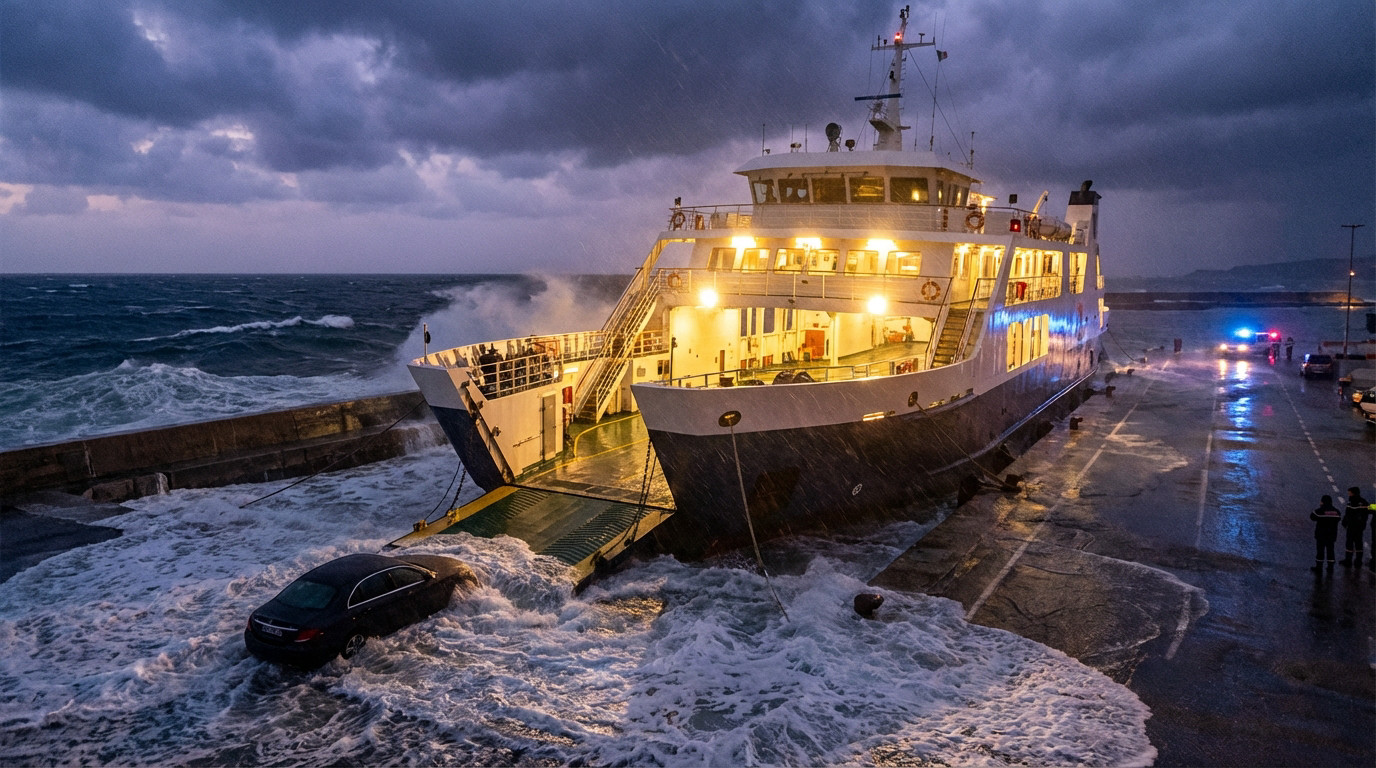
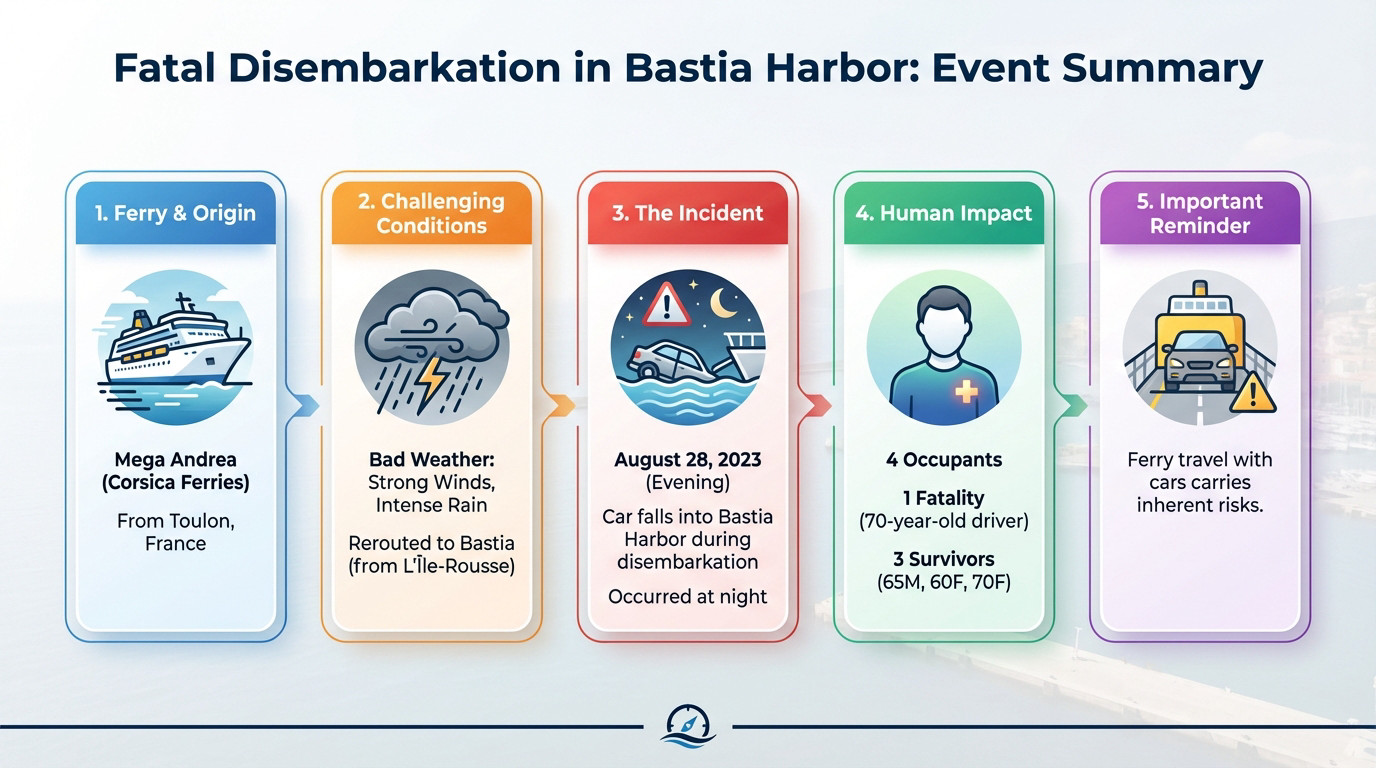
On the evening of August 28, 2023, a nightmare unfolded at the port of Bastia. A car, disembarking from a ferry, tipped over the edge. It plunged straight into the harbor’s dark waters. This is the scenario no traveler ever expects.
Four passengers were trapped inside the sinking vehicle. The driver, a 70-year-old man, unfortunately did not make it out alive. Authorities confirmed there was one fatality in this tragic accident.
The other three passengers—a 65-year-old man and two women aged 60 and 70—were pulled from the car. Rescuers managed to get them out. They survived, though the shock remains immense.
For many, bringing a car on a Corsica ferry is standard. This event highlights the risks.
A Rerouted Journey Under A Dark Sky
The vessel involved was the Mega Andrea, a massive ship. It had arrived from Toulon, on the French mainland. The journey seemed routine at first.
However, the crossing was plagued by severe bad weather. Violent winds and heavy rains forced the captain to change course. The scheduled docking at L’Île-Rousse was canceled. Conditions were simply too dangerous.
Consequently, the ferry was diverted to Bastia. In these chaotic conditions, deep in the night, the disembarkation procedure turned fatal. The storm played a major role.
Aftermath and Accountability
Once the initial shock of the accident subsided, attention immediately shifted to the frantic rescue efforts and the looming question of responsibility.
A Desperate Rescue Against the Clock
Three passengers owe their survival to the gut instinct of local workers. Two CCI port employees and a Hestia security guard didn’t hesitate. They plunged into the pitch-black water immediately.
Rescuing them was a nightmare scenario. The team tried smashing the windows, but the glass refused to break. Water pressure against the doors made entry nearly impossible. Every second dragged on.
The breakthrough came from the back. They managed to pry open the trunk of the sinking car. Through that narrow escape route, they pulled the three survivors out alive.
Key stages of the rescue operation:
- Failed attempts to smash the car windows.
- Decision to attempt extraction via the vehicle’s rear.
- Successful opening of the trunk despite immersion.
- Extraction of the three surviving passengers.
The Official Response and Ongoing Inquiries
Official emergency teams, including twenty firefighters, arrived shortly after. Their mission turned tragic as they couldn’t save the driver. They recovered the 70-year-old man’s body from the depths.
Authorities are demanding answers. The Bastia prosecutor opened a file for involuntary homicide right away. Investigators are looking at a potential wrong turn and the port’s safety measures during the storm.
The Corsican CCI promised total cooperation. They launched a parallel internal audit to review their procedures. Psychological support is also being provided to the shattered survivors and witnesses.
Official actions taken post-accident:
- judicial inquiry for involuntary homicide.
- Launch of an internal investigation by the Corsican CCI.
- Establishment of a psychological support unit.
A Night of Multiple Emergencies
That fatal plunge wasn’t the only nightmare unfolding on the Mega Andrea that evening.
Another Crisis Hours Before the Accident
Long before the fatal plunge, the Mega Andrea was already battling a severe emergency. A pregnant woman, seven months along, went into distress while the ship struggled against Storm Rea. The captain had no choice but to call for help. It was chaotic.
The Dragon 2B helicopter scrambled to airlift her toward Bastia. Gusts hitting 100 km/h made a hospital landing impossible, forcing a diversion to Poretta airport. That medevac operation was terrifyingly complex.
Doctors managed to save the mother, who delivered her baby prematurely that same night. The infant was immediately transferred to a specialized unit in Nice by another helicopter. Thankfully, both survived the ordeal.
| Incident | Heure approximative | Nature de l’urgence | Issue |
|---|---|---|---|
| Évacuation médicale | 22h00 | Accouchement prématuré | Mère et bébé pris en charge, transfert du nourrisson à Nice |
| Corsican ferry accident | 01h00 (le 29/08) | Chute de voiture dans le port | One fatality, trois survivants secourus |
Ferry Travel and Inherent Risks
Maritime transport is statistically incredibly secure for millions of tourists. Yet, this tragedy proves that zero risk is simply a fantasy. When the elements rage, steel and engines have limits.
Getting vehicles off a ship during a storm is a high-stakes operation. Visibility drops to zero, and ramps become slippery traps for the distracted. Crew and passengers must stay hyper-alert during these moments.
Understanding how to get to Corsica involves respecting the sea’s unpredictable power. Schedules are irrelevant when lives are on the line. Safety protocols are written in blood for a reason.
The tragedy in Bastia harbor serves as a somber reminder of how quickly a journey can turn fatal under adverse weather conditions. While the heroic rescue of three passengers offers some relief, the loss of life remains profound. As investigations proceed, this event highlights the critical need for vigilance and strict safety protocols during ferry operations.
FAQ
What happened during the Corsican ferry accident in Bastia?
On the evening of August 28, 2023, a car fell into the harbour waters while disembarking from the Mega Andrea ferry in Bastia, Corsica. The vessel had been diverted from its original destination due to severe weather conditions. The vehicle tipped over the quay during the exit procedure.
Was there a fatality involved in the accident?
Yes, the accident resulted in one fatality. The 70-year-old male driver of the vehicle was unable to escape and died. Three other passengers in the car were successfully rescued by port staff and security personnel.
Why was the ferry diverted to Bastia?
The ferry was diverted to Bastia due to bad weather. Strong winds and heavy rain made the originally scheduled docking at L’Île-Rousse unsafe, forcing the captain to reroute the ship to the port of Bastia for a safer arrival.
How were the survivors rescued from the submerged car?
Port employees and a security agent dived into the water to assist. After failing to break the car windows due to water pressure, they managed to open the boot (trunk) of the vehicle and extracted the three survivors through the rear before the car fully sank.
A fatal disembarkation in bastia harbor
The plunge into the water
On the evening of August 28, 2023, a tragedy occurred at the port of Bastia, Corsica. A vehicle, whilst disembarking from a ferry, tipped over and fell into the harbour waters. It is the scenario no one ever wants to live.
Inside the car were four people. A 70-year-old man, the driver, did not survive the submersion. There was one fatality recorded in this tragic accident.
The three other passengers—a 65-year-old man and two women aged 60 and 70—were pulled from the car. They survived the ordeal, but the shock is immense.
For many, bringing a car on a Corsica ferry is standard. This event highlights the risks.
A rerouted journey under a dark sky
The ferry involved is the Mega Andrea, a ship belonging to the company Corsica Ferries. It was arriving from Toulon, on the French mainland, carrying hundreds of passengers.
The journey was severely complicated by bad weather. Strong winds and intense rains forced the ship to change its course. The docking initially scheduled for L’Île-Rousse was cancelled, as conditions were deemed too dangerous for the vessel to approach.
The ferry was therefore diverted to Bastia. It was under these difficult conditions, in the middle of the night, that the disembarkation procedure turned into a drama.
Aftermath and accountability
After the shock of the accident, questions immediately turn to the unfolding of the rescue and the determination of responsibilities.
A desperate rescue against the clock
Three people owe their lives to the rapid intervention of two port employees (CCI) and a security agent (Hestia). They dived into the dark water without hesitation to help.
The rescuers first attempted to break the windows of the submerged vehicle, but were without success. The immense water pressure made the task almost impossible to achieve manually. Every single second counted as the car sank deeper.
The solution eventually came from the rear. They managed to open the boot and successfully extract the three survivors through this unlikely route, performing a veritable act of bravery in the chaos.
- Unsuccessful attempts to break the car windows.
- Decision to attempt extraction via the rear.
- Successful opening of the boot despite immersion.
- Extraction of the three surviving passengers.
The official response and ongoing inquiries
About twenty firefighters were quickly mobilized to the scene. Their mission was unfortunately grim: to recover the lifeless body of the driver from the bottom of the harbour waters.
The prosecutor of Bastia immediately opened a judicial inquiry for involuntary manslaughter. The initial investigative leads focus on a possible maneuvering error by the driver and the specific safety conditions of the disembarkation process that night.
The CCI of Corsica promised total cooperation and launched its own internal inquiry. Psychological support was also immediately put in place for the victims, their families, and the witnesses involved.
- judicial inquiry for involuntary manslaughter.
- Launch of an internal investigation by the Corsican CCI.
- Establishment of a psychological support unit.
A night of multiple emergencies
This tragic car accident was in fact not the only grave event to occur on the Mega Andrea that evening.
Another crisis hours before the accident
A few hours before the disembarkation tragedy, the same ferry had already declared a major emergency. A pregnant woman, about to give birth, had to be evacuated while the ship was caught in the full storm.
A helicopter was dispatched to transport her to the hospital in Bastia. The operation (medevac) was made extremely perilous by the same severe weather conditions affecting the area.
The mother and her baby, born prematurely, were effectively cared for. The newborn subsequently required a transfer to a specialized service in Nice. It was a night of intense stress for everyone involved in these operations.
| Incident | Approximate Time | Nature of Emergency | Outcome |
|---|---|---|---|
| Medical Evacuation | 22:00 | Premature labour | Mother and baby cared for, infant transferred to Nice |
| Corsican ferry accident | 01:00 (on 29/08) | Car falling into harbour | One fatality, three survivors rescued |
Ferry travel and inherent risks
Traveling by ferry remains a very safe means of transport generally. However, this event reminds us that zero risk does not exist, especially when facing the raging elements.
Boarding and disembarking procedures, especially in bad weather, are critical moments. They demand maximum vigilance from the crew and passengers alike to ensure everyone remains safe during the complex process of moving vehicles.
Understanding how to get to Corsica by sea implies being aware of these realities. Safety must always take precedence over schedules and logistical imperatives, regardless of the delays caused.