
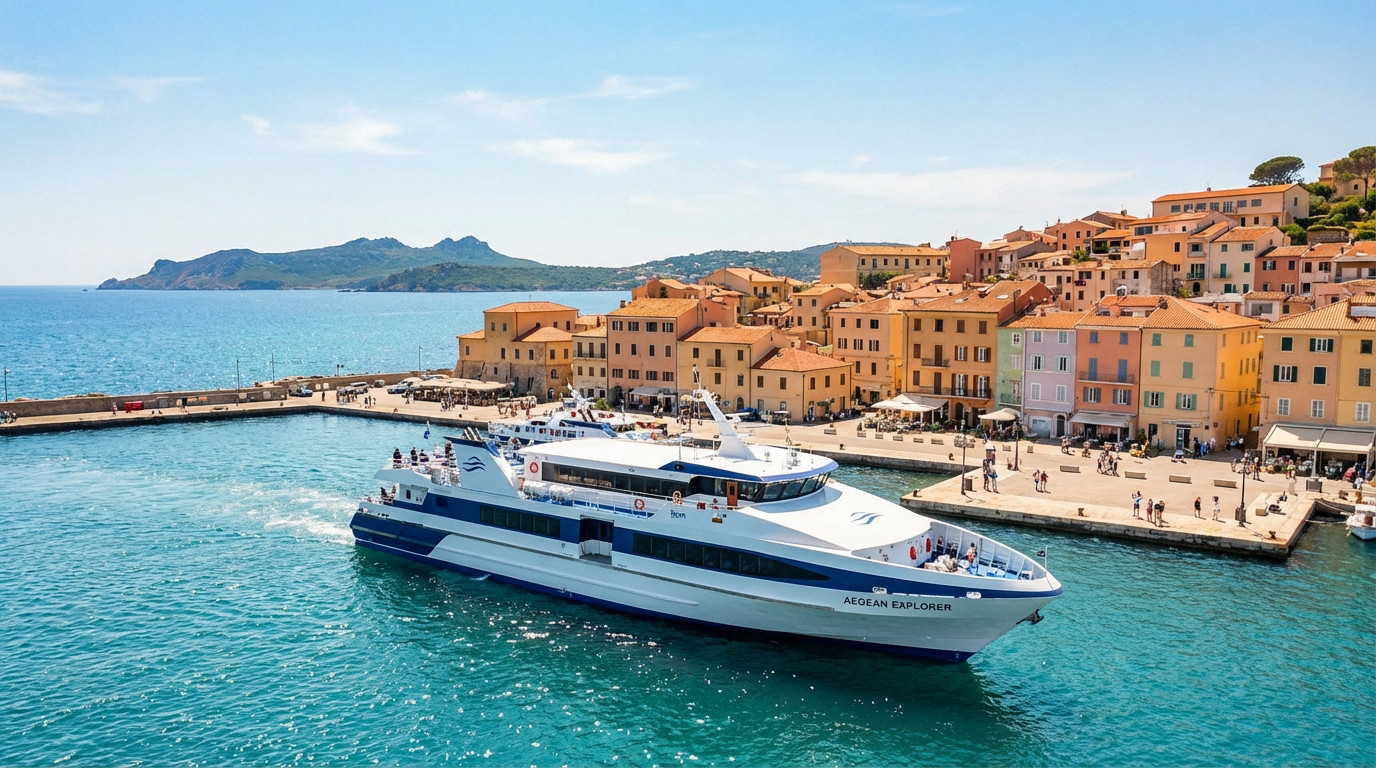
The essential takeaway: Reaching Sardinia by sea is versatile, with departures from mainland Italy (Genoa, Livorno, Civitavecchia), France (Toulon, Nice), Spain (Barcelona), and Corsica. This wide selection enables travelers to optimize travel time by aligning departure ports with their final destination on the island. With over 40 daily crossings, the fastest route from Bonifacio takes merely 50 minutes. >>> The best prices on the web with Corsica Ferries !!!
Corsica Ferries >>> Black Friday offer: up to 70% off!!!
Are you feeling overwhelmed by the confusing maze of logistics and endless route options required to reach the Mediterranean’s emerald gem with your vehicle? We cut through the noise to compare the most strategic ferry to sardinia departure ports across Italy, France, and Spain, ensuring you finally pick the exact connection that fits your specific itinerary. Get ready to uncover smart travel hacks that save you hours of unnecessary driving and guarantee a completely seamless start to your upcoming island adventure.
- Your Sardinian Gateway: The Main Departure Countries
- Choosing Your Italian Departure Port: A Strategic Breakdown
- International and Inter-island Ferry Routes at a Glance
- Logistics: How to Reach Your Departure Port
Your Sardinian Gateway: The Main Departure Countries

From Mainland Italy: The Classic Route
Most travelers underestimate the sheer volume of connections here. Italy offers the most direct access, with ferry to sardinia departure ports scattered all along the western coastline. It is the logical choice if you want maximum flexibility for your crossing.
You have five heavy-hitters: Genoa, Livorno, Piombino, Civitavecchia, and Naples. Each hub services different areas, so picking the right one saves you hours of driving later.
Corsica Ferries >>> Black Friday offer: up to 70% off!!!
Surprisingly, even Sicily connects to the island via Palermo. It is a fantastic detour if you are already road-tripping through the deep Italian south.
From France: The French Riviera Connection
France stands as the second major gateway, particularly for those driving from Western Europe. Why drive all the way down the Italian boot when you can embark sooner?
The southern coast relies on Nice and Toulon as the primary launchpads. These Côte d’Azur ports are strategically positioned to drop you right into northern Sardinia.
Honestly, this is my preferred route. Combining a few days on the Riviera with a Sardinian escape makes for a much richer travel experience.
From Spain and Corsica: Island Hopping Options
Spain offers a third, often overlooked path. Barcelona remains the sole Spanish port with a direct link, acting as a vital Mediterranean gateway for travelers coming from the west.
Then there is Corsica, the quickest hop imaginable. Bonifacio is the star here, offering a brief dash across the strait to Santa Teresa Gallura. You can also find routes from Ajaccio or Bastia, though they are less frequent.
This is essential for anyone planning a trip between the islands effectively this summer.
Choosing Your Italian Departure Port: A Strategic Breakdown
Northern Italy Ports: Gateway to the North of Sardinia
Targeting the Costa Smeralda requires a smart departure choice like Genoa or Livorno. These northern hubs are the absolute best gateways for reaching the top of the island. You save driving time later.
Genoa offers longer crossings that usually run overnight to Olbia or Porto Torres. Livorno sits further south and provides slightly faster routes to Olbia and Golfo Aranci. It represents a solid compromise. The choice depends on your driving preference.
Choosing a northern port like Genoa or Livorno often means an overnight trip. This lets you wake up fresh and ready to explore Sardinia’s famous northern coast.
Central Italy Ports: The Fastest Routes
Do not waste time on the open sea if you hate sailing. The central ports of Civitavecchia and Piombino offer the quickest connections available. Speed is the priority here.
Corsica Ferries >>> Black Friday offer: up to 70% off!!!
Civitavecchia serves as the primary heavyweight for reaching Olbia, Cagliari, or Arbatax. The travel time is significantly shorter compared to northern departures. It is the port of Rome for a reason.
Piombino acts as a brilliant alternative for Olbia during the chaotic high season. This port is smaller, yet it remains incredibly efficient for travelers.
Southern Italy Ports: Connecting to the South of Sardinia
Are you heading specifically to the southern beaches? Departing from Naples or even Palermo in Sicily makes the most geographical sense. Forget driving down from Olbia.
The Naples to Cagliari route is perfect for exploring the Sardinian capital. It is a longer haul, but it drops you exactly where you need to be. You avoid hours of driving. It is a strategic move.
The Palermo connection offers a unique opportunity for island hopping. It suits travelers doing a grand tour of Italy.
International and Inter-island Ferry Routes at a Glance
Italy is not the only option. Let’s take a quick but precise look at departures from France, Spain, and Corsica.
The French and Spanish Connections
Start with France. The ports of Toulon and Nice are the primary departure points. These hubs handle significant mainland traffic.
These routes serve Porto Torres and Golfo Aranci in northern Sardinia. It is the perfect strategy for travelers from France, Switzerland, or the Benelux who want to avoid the long drive down the Italian peninsula.
Switching to Spain, the sole direct link runs from Barcelona to Porto Torres. It is a long overnight crossing, but it remains an excellent option to connect Spain to Sardinia without passing through France or Italy.
Corsica Ferries >>> Black Friday offer: up to 70% off!!!
Corsica to Sardinia: The Shortest Sea Crossing
This is by far the shortest crossing available. The main route connects Bonifacio – Santa Teresa Gallura, taking less than an hour. You can practically see the other island from the dock.
Alternative links exist from Ajaccio and Bastia to Porto Torres, offering flexibility for those exploring Corsica first. If you are thinking about taking your car on these short trips, check the regulations for these multi-island itineraries.
Departure Ports and Sardinian Arrival Zones: A Summary Table
This table synthesizes the data to help you visualize exactly which departure port serves which Sardinian zone. It cuts through the confusion of multiple operators.
Here is the breakdown of origin points versus arrival destinations. Italian ports dominate the eastern and southern routes, while French and Spanish departures focus heavily on the north. This distinction is vital for minimizing your driving time.
| Departure Country/Region | Departure Port(s) | Main Sardinian Arrival Zone |
|---|---|---|
| Italy | Genoa, Livorno, Civitavecchia, Naples | North (Olbia, P. Torres), South (Cagliari), East (Arbatax) |
| France | Toulon, Nice | North (Porto Torres, Golfo Aranci) |
| Spain | Barcelona | North (Porto Torres) |
| Corsica | Bonifacio | North (Santa Teresa Gallura) |
Logistics: How to Reach Your Departure Port
Ok, you picked your port. But how do you actually get there? It is a logistical question many travelers overlook until the last minute.
Reaching Italian Ports from Northern Europe
Driving from Germany or the UK? Be realistic. Reaching southern hubs like Genoa or Livorno is a long haul. You absolutely must plan an overnight stopover to break up the journey.
Alternatively, trains are a comfortable option for reaching these cities. Otherwise, consider flights; airports in Genoa, Pisa (for Livorno), and Rome (for Civitavecchia) are well-connected hubs.
Don’t underestimate the travel time to the port itself. Factoring this in is the key to a stress-free start to your Sardinian holiday.
Day Trip or Overnight Ferry? What to Expect
Shorter crossings, like Civitavecchia to Olbia, often run by day. It is faster, but realize that it effectively eats up a full day of your precious holiday time.
Longer routes, such as Genoa-Olbia, are typically overnight ferries. The advantage is obvious: you save a hotel night and arrive in the morning, ready to explore immediately.
Most ferries allow you to board with a car, campervan, or motorcycle. This specific flexibility is the main reason to choose the boat over a cramped flight.
A Final Checklist Before You Go
One final tip before booking. Your arrival port in Sardinia is just as critical as your departure point to avoid unnecessary driving later.
- Choose your arrival port based on your destination (Olbia/Golfo Aranci for north-east, Porto Torres for north-west, Cagliari for south).
- Consider total travel time, including the drive or train to the ferry departure port.
- Decide between a faster day crossing or a relaxed overnight journey.
Choosing where to catch the boat to Sardinia is the first step of your adventure. Whether departing from mainland Italy, France, or Spain, options like Genoa, Toulon, or Barcelona offer great flexibility. Select the port that aligns with your travel plans and prepare for a memorable crossing to this Mediterranean gem.
Corsica Ferries >>> Black Friday offer: up to 70% off!!!
FAQ
What are the main departure ports in Italy for ferries to Sardinia?
Italy offers the widest range of options for reaching Sardinia by sea. In the north, Genoa and Livorno are the primary gateways, ideal for reaching Olbia and Porto Torres. If you are travelling from central Italy, Civitavecchia (near Rome) and Piombino provide frequent and often faster connections to Olbia and Arbatax. For those in the south, Naples and even Palermo in Sicily offer routes to Cagliari.
Can I catch a ferry to Sardinia directly from France or Spain?
Yes, you can avoid driving through Italy if you are coming from the west. From France, the ports of Toulon and Nice on the French Riviera operate regular crossings, mainly to Porto Torres and Golfo Aranci. From Spain, Barcelona is the sole departure point, offering a direct link to Porto Torres, which is a convenient option for travellers coming from the Iberian Peninsula.
Is it possible to travel by boat from Corsica to Sardinia?
Absolutely, and it is the quickest way to travel between the two islands. The most popular route connects Bonifacio in southern Corsica to Santa Teresa Gallura in northern Sardinia. This crossing is incredibly short, taking only about 50 minutes, which makes it perfect for island hopping or even a day trip.
Which ferry route to Sardinia is the fastest?
The duration depends heavily on your departure point. The absolute shortest crossing is the inter-island route from Bonifacio (Corsica) to Santa Teresa Gallura, lasting under an hour. From mainland Italy, the route from Piombino to Olbia is generally the fastest, taking approximately 5 and a half hours during the day, while crossings from Genoa or Barcelona are significantly longer and are often overnight journeys.