
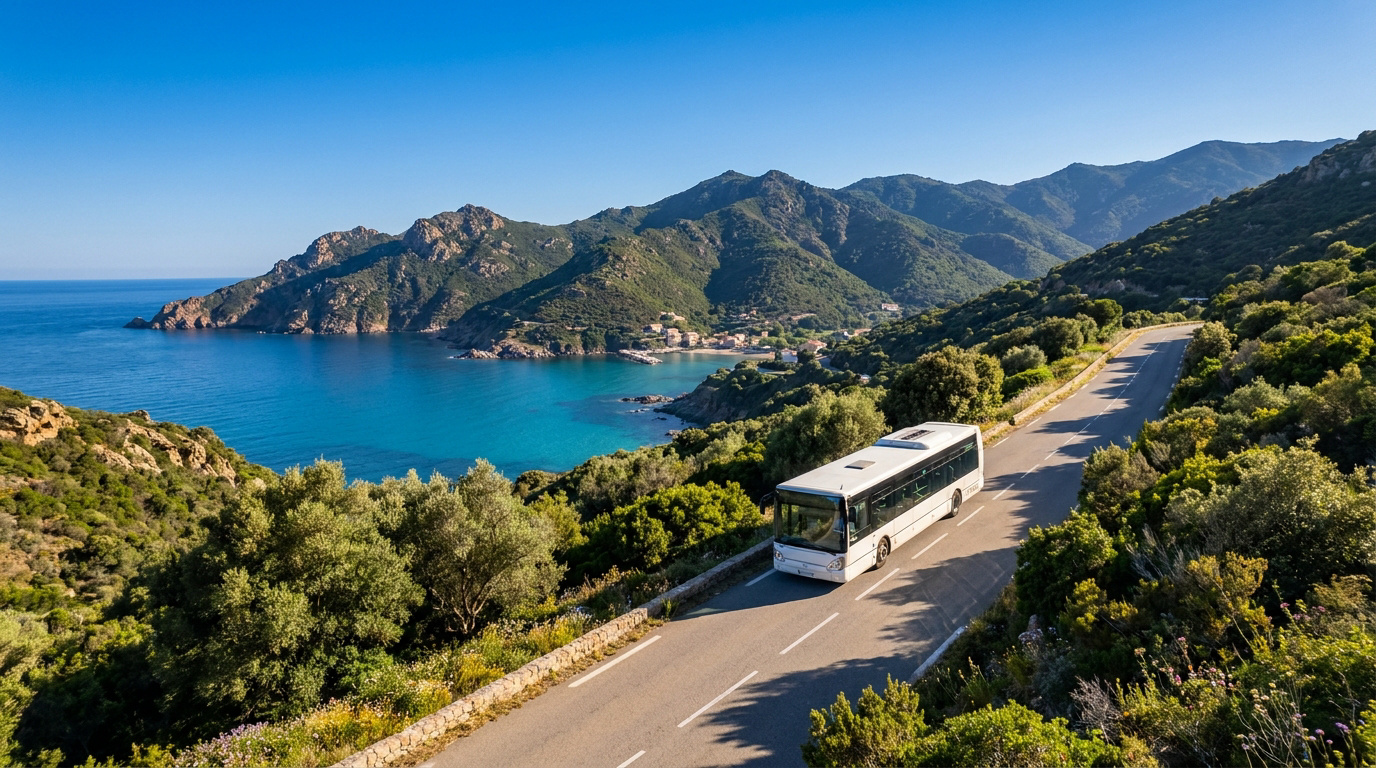
The Corsica Bus portal aggregates schedules for over 30 private and public carriers, serving as the primary information hub for island-wide transit. While navigating the rugged terrain is achievable without a rental, many travelers find themselves stranded at remote trailheads due to rigid seasonal timetables.
Understanding the logistical nuances of the 2026 network is the only way to avoid costly last-minute private transfers. We will analyze the primary corridors and airport links to help you master your regional itinerary.
- Bus Corsica: Network Feasibility and Major Routes in 2026
- Car vs. Bus Comparison: Selecting Your Corsican Transit Mode
- Logistical Realities: Ticket Booking and Seasonal Reliability
- Strategic Planning: Integrating Buses with Regional Train Lines
Bus Corsica: Network Feasibility and Major Routes in 2026
Corsica’s 2026 bus network centers on the A Berlina lines and inter-city axes connecting Ajaccio, Bastia, and Bonifacio. While coastal hubs are accessible via the Corsica Bus portal, remote interior trails require specific seasonal shuttles.
Planning your travel across the island requires a grasp of the primary transit corridors. These strategic routes link major urban centers like Ajaccio and Bastia, providing reliable year-round connectivity for commuters and visitors.
Corsica Bus is a non-official information portal, not a transport company. It aggregates schedules for buses, trains, and hiker-specific shuttles to simplify your logistics.
Primary Corridors: Linking Ajaccio, Bastia, and Bonifacio
The main transit axes form the backbone of the island. These routes effectively link the largest urban hubs, such as Ajaccio and Bastia, ensuring consistent travel options throughout the year.
Specific A Berlina lines serve the Porto-Vecchio micro-region. These buses connect the southern coastal villages, providing accessible transport for residents and tourists exploring the surrounding Mediterranean landscapes.
The Corsica Bus portal acts as the central aggregator. It compiles schedules from various private and public carriers, making it the primary tool for checking current departure times.
Airport Links: Transfers from Figari and Bastia to Hubs
Shuttle services operate from Figari-Sud Corse and Bastia-Poretta airports. Travelers can reach city centers quickly via these dedicated links. Most shuttles are timed to align with major flight arrivals throughout the day.
Frequency remains consistent during standard daylight operating hours. But you should be aware that services thin out significantly late at night. Plan your arrival accordingly to avoid missing the last transfer.
Digital Tools: Using the Corsica Bus Portal for Live Updates
The Corsica Bus website is a reliable, non-official resource. You can utilize the interactive map features to locate specific stops. It remains the most effective way to cross-reference multiple private carrier routes.
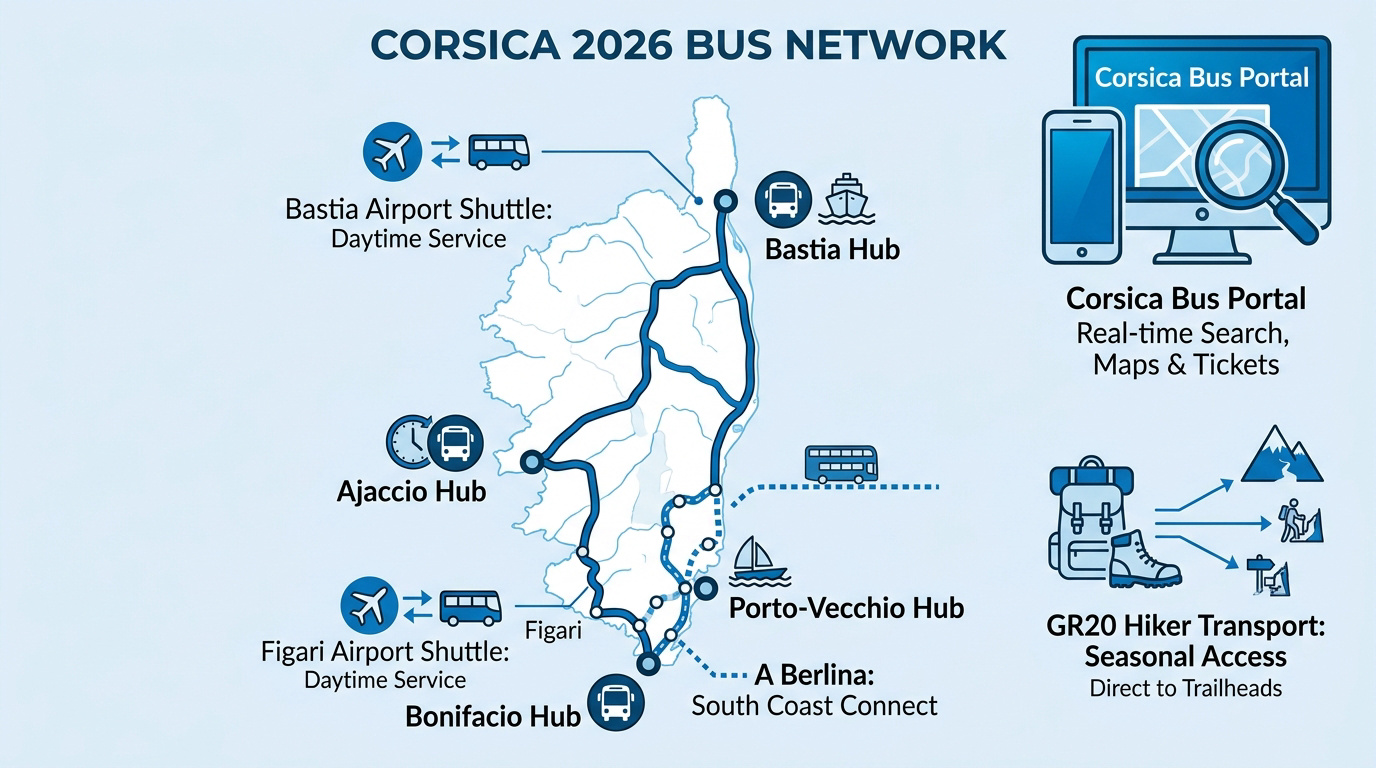
Hiker-specific transport is also listed. Shuttles provide vital access for the famous GR20 route.
Car vs. Bus Comparison: Selecting Your Corsican Transit Mode
While the bus network covers the main arteries, choosing between public transport and a personal vehicle involves weighing freedom against logistical ease.
Flexibility Trade-offs: Travel Times and Movement Freedom
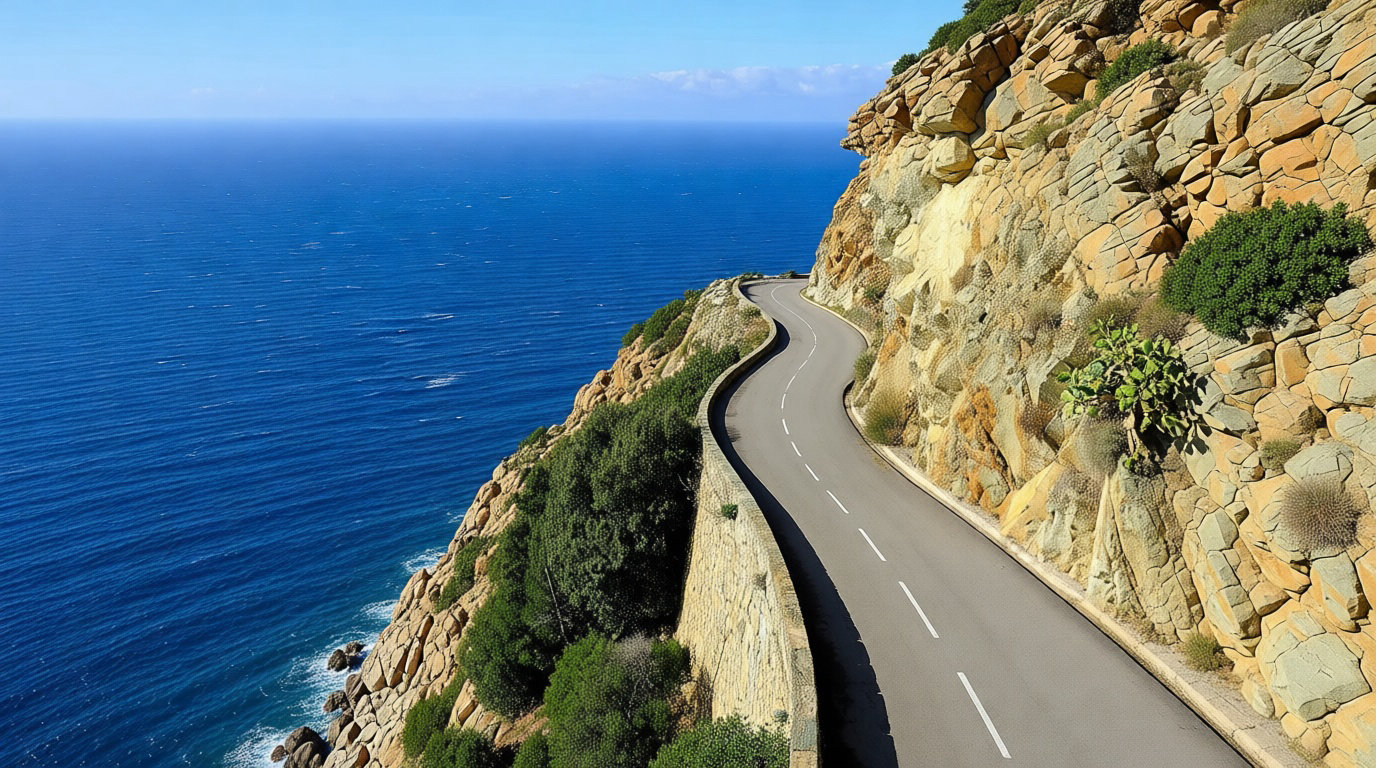
Travel durations vary significantly. Buses often take longer than cars due to multiple stops. However, passengers find psychological relief by avoiding narrow, winding mountain roads.
Fixed schedules limit spontaneous exploration. Conversely, driving offers total independence. The following table clarifies which mode aligns with your specific travel strategy and logistical needs.
| Criterion | Public Bus | Rental Car | Verdict |
|---|---|---|---|
| Travel Time | Fixed/Longer | Flexible/Faster | Car for speed |
| Cost | Lower/Solo savings | Higher/Rental+Fuel | Bus for budget |
| Accessibility to Beaches | Main hubs only | Remote beaches | Car for access |
| Stress Level | Low/No driving | High/Narrow roads | Bus for comfort |
Planning your itinerary requires careful thought. Consider the logistics of getting around Corsica without a car before finalizing your bookings.
Budgeting Decisions: Bus Fares versus Rental Car Expenses
Evaluate the cost-benefit ratio carefully. Solo travelers save significantly. Daily car rentals and fuel remain high-cost expenses for individuals.
Inter-city routes offer affordable fares. Yet, group travel might make a car more economical. Sharing the initial rental price reduces the per-person burden.
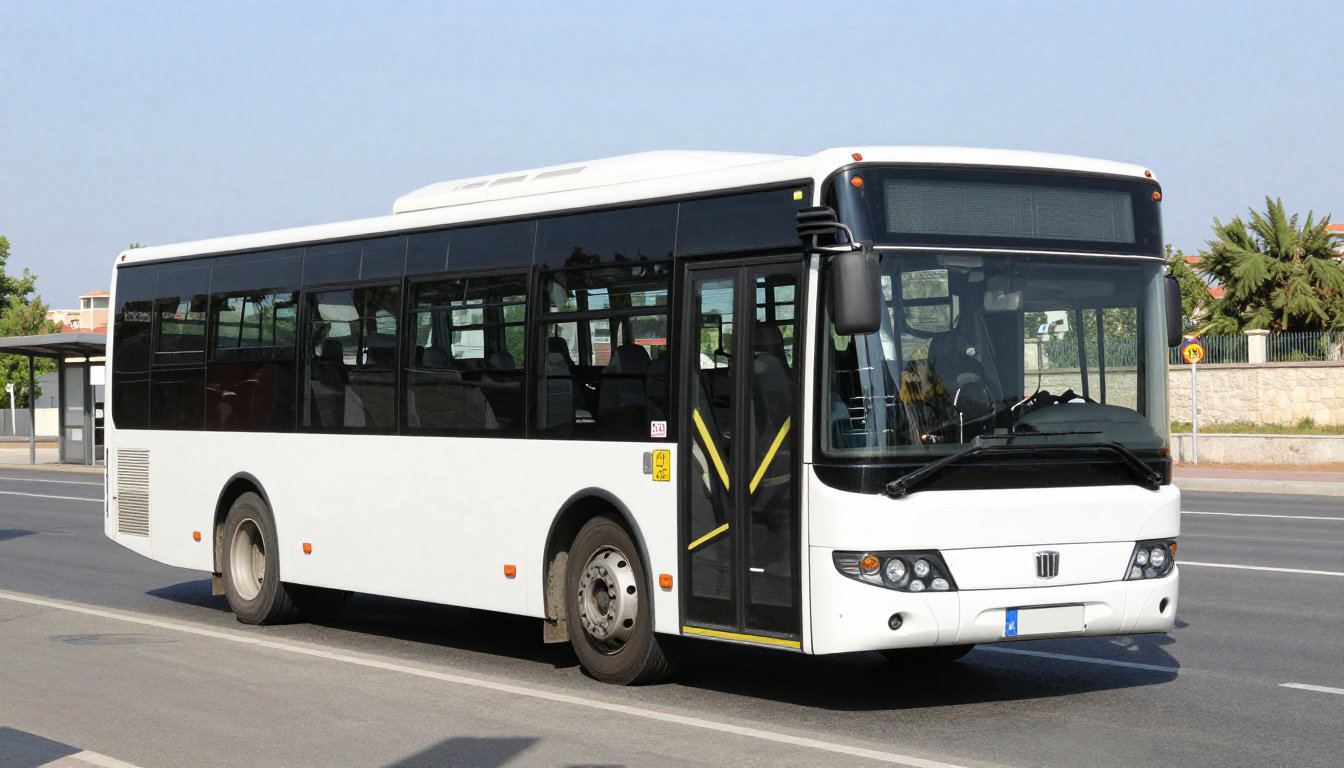
The A Citadina electric shuttle in Porto-Vecchio is free and connects the port, town center, and parking areas.
Local savings improve your budget. Always check current gas prices in Corsica. These variables directly impact your total transportation investment.
Logistical Realities: Ticket Booking and Seasonal Reliability
Beyond choosing your mode of transport, understanding the “how-to” of Corsican ticketing is vital for a smooth journey.
Most drivers only accept cash on-board. Bus services are drastically reduced starting in October and may be non-existent on May 1st or Assumption Day.
Purchasing Protocols: Ticket Outlets and Cash-Only Realities
Securing a seat on a Bus in Corsica requires physical currency. Most drivers handle transactions directly on-board, accepting only cash for single fares. Carrying small denominations ensures a faster boarding process.
Physical ticket kiosks exist for pre-departure booking. You will find these designated outlets at major transport hubs, notably within the main stations of Bastia or Ajaccio.
Heavy suitcases are typically stored in the hold. Drivers prioritize safety and space efficiency when loading larger items.
Always arrive at the bus stop at least 15 minutes early, as drivers often depart the moment luggage is secured.
Seasonal Availability: Summer Peaks and Winter Service Reductions
Service frequency fluctuates wildly between seasons. Summer schedules offer hourly departures on primary transit lines to accommodate tourists. However, drastic reductions occur immediately once October begins, limiting options significantly.
Winter hours for local shuttles reflect a slower pace. The A Citadina in Porto-Vecchio, for instance, shifts to a 20-minute frequency and ends service at 13h30 on Sundays during the off-season.
Public holidays often disrupt the entire network. Plan your movements carefully around specific dates:
- Check schedules for May 1st, Assumption Day, and local village saints’ days when buses may not run at all.
Strategic Planning: Integrating Buses with Regional Train Lines
To truly master the island without a car, you must combine the bus network with the iconic Corsican railway.
Rail Synergy: Linking Bus Stops with the Regional Train Network
Efficient travel requires coordinating with Chemins de Fer de la Corse. Ajaccio and Bastia serve as the primary hubs where train stations and bus terminals conveniently meet for travelers.
You should plan multi-stop itineraries for better coverage. Take the train through the scenic mountains, then switch to a bus for the coastal stretches to reach your final destination.
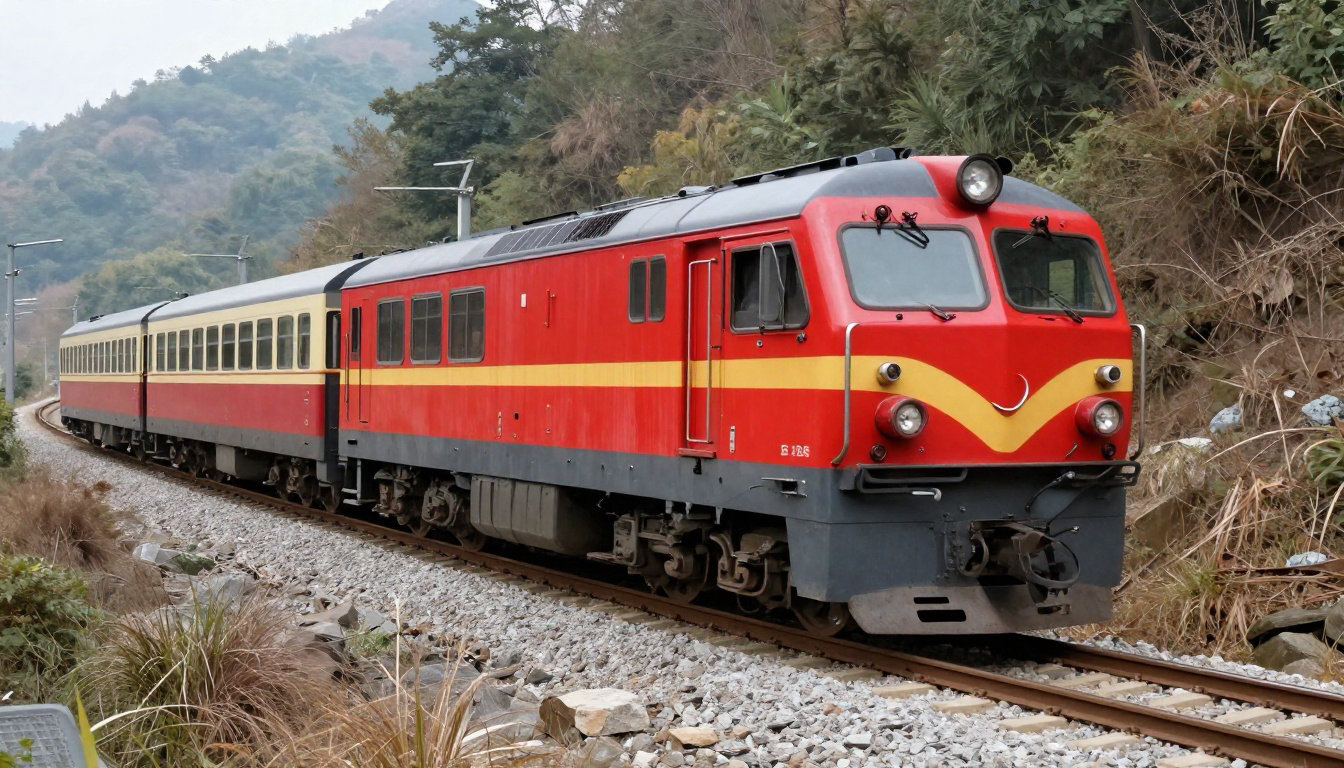
The train offers distinct scenic benefits. It reaches rugged interior areas where a standard Bus in Corsica cannot easily maneuver through the central granite peaks and steep passes.
Geographic Limits: Accessing Remote Beaches and Hiking Trails
Identifying difficult reaches is vital for your logistics. Specific GR20 trailheads and secluded beaches like Saleccia remain largely inaccessible by standard public bus lines, requiring alternative transport strategies.
An on-demand public transport service often used for reaching remote villages where regular lines do not operate.
The “A Berlina” lines effectively extend reach to nearby coastal spots. However, for deeper exploration, local infrastructure has its limits and requires specific adaptations for the rural interior.
For the most remote villages, the ‘transport à la demande’ (on-demand transport) is often the only public option available.
Consider local boat shuttles or private transfers for the final leg. These alternatives are necessary to bridge the gap to isolated mountain retreats or hidden maritime coves.
Mastering the 2026 bus in Corsica requires strategic planning around central hubs and seasonal shifts. Coordinate your transfers via the Corsica Bus portal and secure cash for onboard fares to ensure seamless transit. Act now to finalize your itinerary and enjoy the stress-free beauty.
FAQ
Is it feasible to navigate Corsica using only the bus network?
While navigating Corsica by bus is entirely possible, it requires meticulous strategic planning due to the island’s unique geography. The network effectively connects major urban hubs such as Ajaccio, Bastia, and Bonifacio, but service to remote interior villages or secluded beaches like Saleccia remains limited or non-existent via standard lines.
To optimize your journey, you should utilize the Corsica Bus portal, which aggregates schedules from various private and public carriers. For the most isolated mountain retreats, you may need to rely on “transport à la demande” (on-demand transport) or seasonal shuttles specifically designed for hikers accessing the GR20 trailheads.
How can I purchase bus tickets for my travels in Corsica?
Ticketing options have modernized, allowing you to secure fares through digital platforms like the M-Ticket Via Corsica or CAPAMOVE applications. Physical tickets and subscriptions are also available at dedicated kiosks in major stations, such as those in Bastia or Ajaccio, and through local tourist offices.
While you can purchase a single ticket directly from the driver upon boarding, be advised that this often incurs a price surcharge. Furthermore, many drivers still operate on a cash-only basis, so carrying small denominations is essential for a seamless boarding process.
What are the typical operating hours and frequencies for Corsican buses?
Bus frequencies vary significantly based on the season and the specific route. During the summer peak, main inter-city lines may offer hourly services, whereas the off-season sees a drastic reduction. For instance, the A Citadina electric shuttle in Porto-Vecchio runs every 15 minutes in summer but shifts to a 20-minute frequency with no Sunday afternoon service in winter.
You must also account for public holidays and administrative adjustments. In 2026, specific lines like the C10 (Portivechju/Bastia) will see schedule shifts around May Day and Ascension Day. Always verify the latest “Info routes” updates, as services may be moved to the preceding or following day during these periods.
Are there reliable bus transfers from Corsican airports to city centers?
Shuttle services are established to link Bastia-Poretta and Figari-Sud Corse with their respective urban hubs. These transfers are generally synchronized with major flight arrivals during standard operating hours. However, travelers should note that service density thins out significantly late at night.
To ensure a successful connection, it is recommended to arrive at the designated airport bus stop at least 15 minutes early. Given that schedules can be subject to change based on flight delays or seasonal demand, consulting the Corsica Bus interactive map for real-time stop locations is highly encouraged.
How does the cost of bus travel compare to renting a car in Corsica?
For solo travelers, the bus network offers a highly economical alternative, with local lines like A Berlina starting as low as €2. Choosing the bus also eliminates the financial burden of high fuel costs and daily rental fees. Notably, the A Citadina shuttle in Porto-Vecchio provides entirely free transit between the port and the town center.
However, for groups or families, a rental car may become more cost-effective despite the initial expense. While the bus reduces the stress of navigating narrow mountain roads, a car provides the flexibility to reach remote areas where public transport does not operate. You should weigh these savings against your need for movement freedom.