
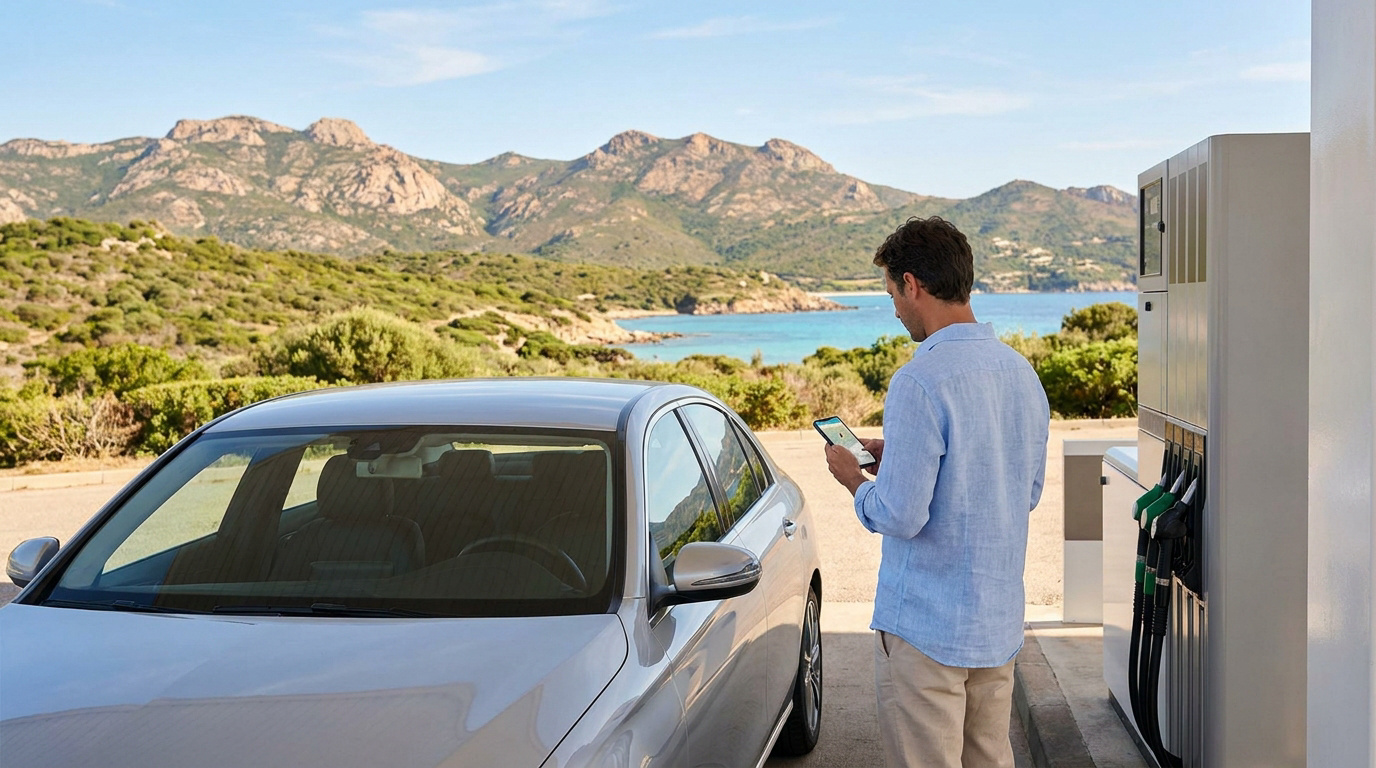
Fuel in Corsica costs 10% to 15% more than in mainland France due to maritime logistical surcharges and specific storage constraints. Current 2026 data shows that gas prices in Corsica can reach 2.50€ per liter in certain independent stations, reflecting a high-tension market shaped by recent supply chain protests.
Travelers often face unexpected budget spikes when refueling in remote mountain villages or near ferry ports. This guide provides a strategic analysis of regional price variations and identifies cost-effective refueling locations to help you optimize your transportation expenses across the island.
- Gas Prices in Corsica: 2026 Market Overview and Mainland Comparisons
- Logistics and Regional Price Variations Across the Corsican Territory
- Tourist Budgeting and Strategic Refueling to Minimize Expenses
- Driving Conditions and Vehicle Efficiency on Corsican Roads
Gas Prices in Corsica: 2026 Market Overview and Mainland Comparisons
Fuel in Corsica costs 10% to 15% more than in mainland France. Budgeting for 2.10€ per liter for unleaded reflects current 2026 maritime logistical surcharges and island-specific taxes.
- 10-15% markup vs mainland.
- 2.10€ projected average for unleaded.
- 25€ potential savings per 50L tank.
Supply chain constraints directly influence the visible price gap between coastal cities and the French mainland.
Price gap between the island and mainland France
Pump rates in Ajaccio and Bastia exceed the national average. SP95-E10 typically hovers around 1.95€ to 1.97€ in urban centers.
This markup impacts your budget. Refueling a 50-liter tank in Corsica costs 15€ to 20€ more than in Marseille.
While planning your ferry trip, remember these differences persist. Explore Corsica logistics to optimize your journey.
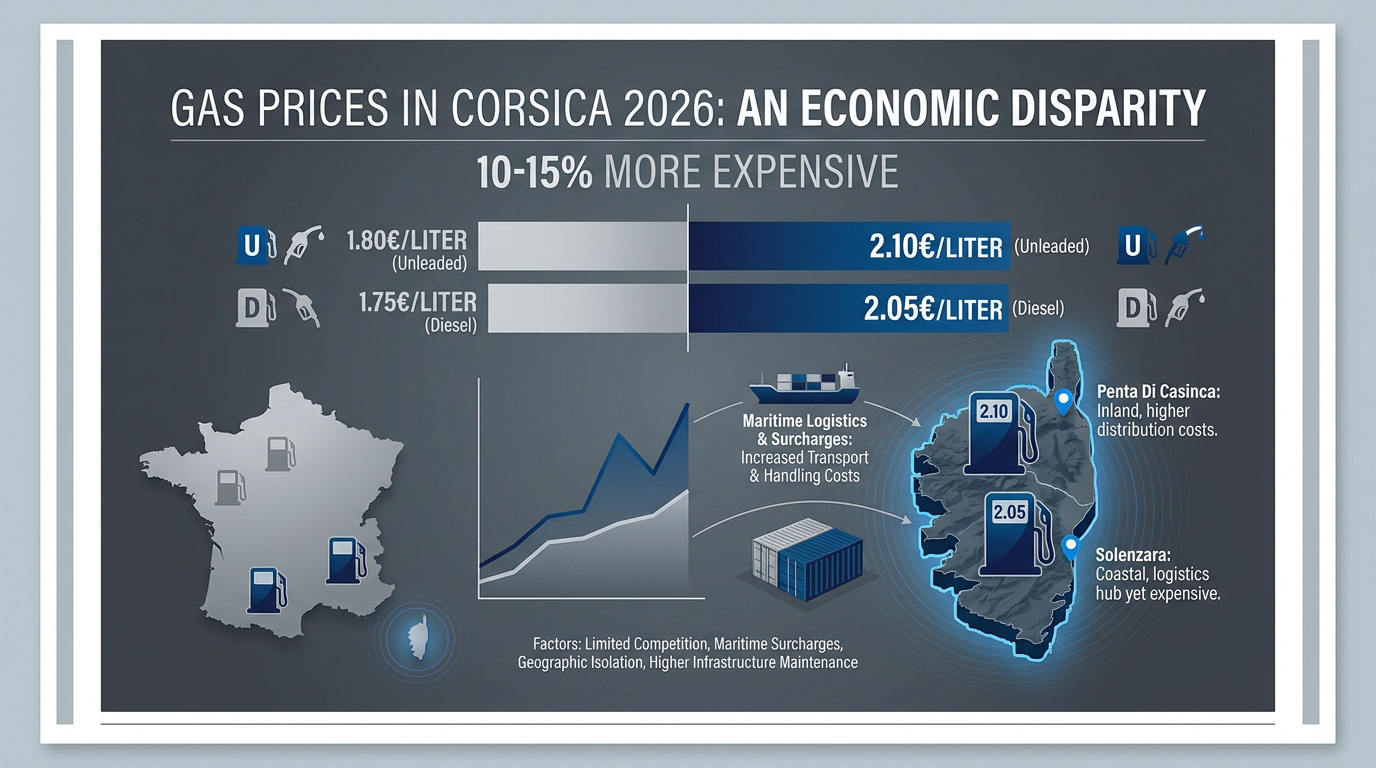
The spread between fuel types presents strategic challenges for motorists navigating the interior.
Availability and cost of diesel versus unleaded fuel
While diesel remains prevalent, the price gap is narrowing. Strategic stops in Penta Di Casinca offer rare relief.
“Finding a station in Solenzara can save you up to 8 cents per liter compared to Porto-Vecchio.”
Verify real-time apps before heading inland. Prices in mountain villages like Levie fluctuate due to limited supply runs.
Logistics and Regional Price Variations Across the Corsican Territory
While pump prices might seem arbitrary, they actually stem from a complex chain of maritime transport and local storage constraints.
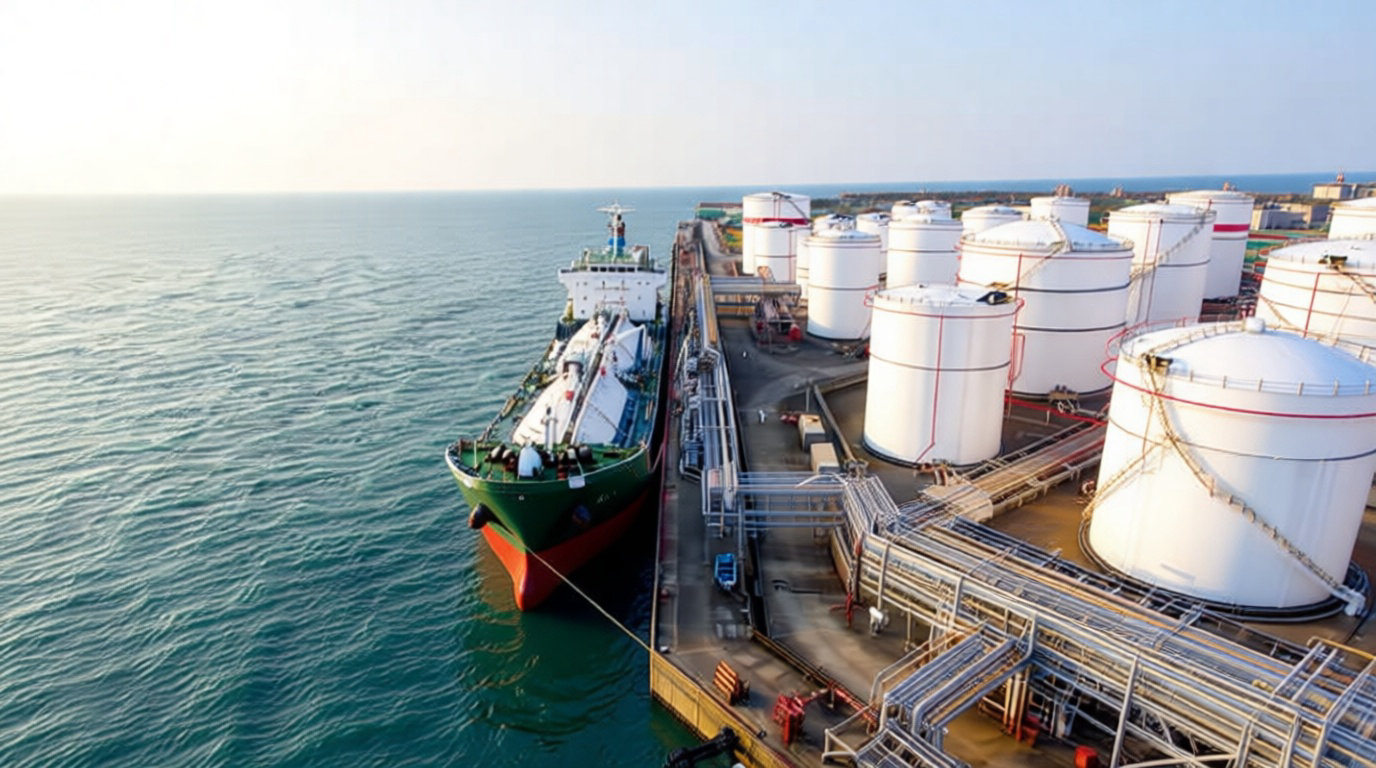
Storage facility located in Lucciana; all fuel imported by ship; maritime surcharge creates a ‘floor price’ regardless of global oil fluctuations.
Impact of maritime transport and storage on the island tax
Every drop of fuel arrives by ship, adding importation costs that mainlanders never see. These maritime logistics significantly inflate the final bill at the pump for every local consumer.
Limited capacity in Lucciana means frequent deliveries and higher operational overhead for local distributors. The 19,000 cubic meter tank requires constant restocking via Corsica ferry routes to maintain supply.
These logistics create a “floor price” that rarely drops even when global oil prices fluctuate. Transporting fuel via ferry from Sete ensures continuity but prevents the island from seeing mainland-level discounts.
Price disparities between coastal hubs and mountain villages
Contrast Ajaccio’s urban rates with remote villages like Levie. Distance from the depots significantly hikes the final price due to the geographical isolation of the interior regions.
Small tankers struggling on narrow mountain roads increase delivery fees for rural station owners. The “last mile” delivery remains a major financial hurdle for stations located far from coastal ports.
Expect to pay a premium for the convenience of refueling in the heart of the Alta Rocca. Regional variations remain a persistent reality for drivers throughout the Corsican landscape.
- Ajaccio: Baseline price
- Levie: +8% markup
- Corte: +5% markup
- Coastal Supermarkets: -3% discount
Tourist Budgeting and Strategic Refueling to Minimize Expenses
Understanding the logistics is one thing, but knowing exactly where to put the nozzle can save you a significant portion of your holiday budget.
Stations to avoid near airports and ferry ports
Avoid refueling near Bastia or Ajaccio ports. These stations target unwary tourists rushing to catch their ferry. Prices peak here due to extreme convenience.
Automated supermarket stations offer better value. Leclerc or Casino in commercial zones provide strategic savings for a ferry Corsica camper traveler. Their rates remain consistently lower.
Fill your tank mid-trip to avoid stress. Don’t wait until you are near the airport. This prevents paying premium prices found at Sardinia ferry ports or local terminals.
Managing seasonal price spikes during the summer peak
July and August see inevitable price hikes. High demand and tourist pressure push rates upward island-wide. This is a logistical reality during the peak summer heat.
Budget an extra 50-100€ for fuel expenses. This prevents unpleasant surprises when calculating total transportation costs. Stable pricing is more common in early June or late September.
| Station Type | Price (Est.) | Convenience | Best For |
|---|---|---|---|
| Supermarket | Low | ★★★☆☆ | Value |
| Coastal | High | ★★★★☆ | Beach |
| Mountain | Very High | ★★☆☆☆ | Safety |
| Port/Airport | Extreme | ★★★★★ | Urgency |
Driving Conditions and Vehicle Efficiency on Corsican Roads
Beyond the price per liter, the way you navigate the island’s unique terrain plays a massive role in your total spend.
Fuel economy strategies for winding mountain passes
Mastering mountain driving is strategic. Use engine braking on descents to avoid wasting fuel. This technique ensures safety while preserving your vehicle.

Terrain impacts efficiency. Constant gear changes on steep curves can increase consumption by 20% compared to flat roads. Steep inclines demand higher torque.
Mountain terrain can increase consumption by 20%. Always prioritize tire pressure checks and engine braking to maintain control.
Corsican kilometers are “heavier” than mainland ones. The winding roads mean you cover less distance per liter of fuel.
Check tire pressure. Low pressure kills efficiency on rough asphalt. Optimal inflation saves money.
Driving in Corsica isn’t about speed; it’s about maintaining a steady rhythm to keep your consumption under control.
Hybrid and electric alternatives for island travel
Evaluate hybrid rentals. They are ideal for stop-and-go mountain traffic where regenerative braking recovers energy. This synchronization provides a smoother experience.
Assess the 2026 EV infrastructure. While charging points grow in rural areas, planning remains essential. With 781 ports, exploring Corsica without a traditional car is now viable.
Compare the rental premium. Sometimes higher hire costs outweigh fuel savings for short stays. If you suffer from seasickness on the ferry, an EV offers superior comfort.
Navigating gas prices in Corsica requires strategic planning to counter the 10-21 cent markup over mainland rates. Prioritize supermarket stations in coastal hubs and utilize real-time tracking apps to secure significant savings before ascending into mountain regions. Act now to optimize your 2026 travel budget and ensure a seamless, cost-effective island journey.
FAQ
How do gas prices in Corsica compare to mainland France for 2026?
Fuel prices in Corsica are structurally higher than the national average, typically reflecting a 10% to 15% markup. This disparity is driven by the island’s total reliance on maritime imports and complex storage logistics in hubs like Lucciana. For a standard 50-liter tank, travelers should budget for a significant surcharge compared to mainland rates.
While national tax adjustments occasionally mitigate global fluctuations, the “island tax” remains a persistent reality. Strategic refueling at coastal supermarkets can offer some relief, but prices generally peak in remote mountain regions due to the high cost of inland distribution.
Which locations offer the most competitive fuel rates on the island?
Data indicates that Penta Di Casinca and Solenzara often provide some of the most competitive prices for unleaded and diesel. For instance, stations in Solenzara can offer savings of up to 8 cents per liter compared to high-traffic coastal fronts like Porto-Vecchio. Supermarket stations, such as those operated by Leclerc or Casino, remain the most cost-effective options for budget-conscious drivers.
Conversely, it is essential to avoid refueling in the immediate vicinity of ferry ports in Bastia or Ajaccio, where prices are frequently inflated to target departing tourists. Utilizing real-time price monitoring apps before entering the interior is a highly recommended strategy to secure the best available rates.
Why is there such a significant price gap between Ajaccio, Bastia, and rural villages?
The price variance is largely dictated by the “last mile” logistics and proximity to primary depots. While urban centers like Ajaccio serve as baseline price points, remote mountain villages such as Levie can see markups of approximately 8%. This is due to the increased operational overhead of transporting fuel via small tankers along narrow, winding mountain roads.
Furthermore, local market dynamics and limited competition in rural areas allow for higher margins. While coastal hubs benefit from higher volume and better infrastructure, the convenience of refueling in the heart of the Alta Rocca comes at a premium that reflects the difficulty of supply chain maintenance in rugged terrain.
What impact does maritime transport have on Corsican fuel logistics?
Every drop of fuel consumed in Corsica must be imported by ship, introducing mandatory maritime surcharges that do not exist on the mainland. These logistics involve specialized port handling, storage in dedicated tanks, and frequent deliveries to compensate for limited local capacity. These fixed costs create a “floor price” that prevents island rates from dropping significantly, even when global oil prices fluctuate.
Weather conditions and maritime regulations also play a critical role, as disruptions in sea rotations can lead to logistical bottlenecks. This structural dependency on sea routes ensures that Corsican fuel prices remain decoupled from the more flexible distribution networks found in continental France.
Are there specific fuel types like LPG or E85 available in Corsica?
Yes, alternative fuels are available but their distribution is more restricted than standard petrol or diesel. LPG (GPL) is accessible in major hubs including Ajaccio, Bastia, Corte, and Porto-Vecchio, with prices typically ranging between 1.300€ and 1.411€. For those utilizing high-ethanol blends, E85 is currently offered at specific stations in Ajaccio.
Travelers using these specific fuel types should plan their routes with precision, as availability in mountain sectors is extremely limited. For hybrid or electric vehicle users, the 2026 infrastructure continues to expand, though rural charging remains a logistical factor that requires advanced strategic planning.